Dickens & Rumi
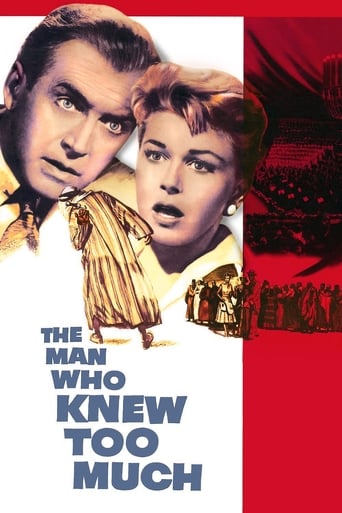
Cover of The Man Who Knew Too Much

film

The Man Who Knew Too Much

Age rating, content warnings & parent guide

1956

Is The Man Who Knew Too Much appropriate for your child? See the reviewed age guidance, content cautions, positive themes, and supporting evidence below.

An American doctor and his wife, a former singing star, witness a murder while vacationing in Morocco, and are drawn into a twisting plot of international intrigue when their young son is kidnapped.

Source checked

Where to watch or buy

As an Amazon Associate, Dickens & Rumi may earn from qualifying purchases, at no extra cost to you.

10-second decision

Is this likely to fit your family?

Age guidanceNot listed
Strongest cautionsFrightening scenes 4/5 · Violence 3/5 · Death of a character 2/5
Strongest positivesCourage & resilience 4/5 · Good role models 3/5
Recommendation3/5

Courage & resilience; strongest caution: frightening scenes.

This is the quick scan. Open the evidence and methodology below for the basis behind each rating.

Quick context

What parents should know

Courage & resilience; strongest caution: frightening scenes.

Readiness snapshotMain watch-out: Frightening scenes 4/5
Recommendation 3/5

Editorial rating

How this review was built

Dickens & Rumi editorial
Source checkedPublication method
14Scored categories
14Evidence notes
0Explicit 0/5 checks
Oct 23, 2026Last updated

Dickens & Rumi describes what is present; families decide what matters to them. Community reactions are kept separate from official content ratings.

Review depth14 scored categories14 evidence notes

Quick view

At a glance

Recommended ageNot listed

Strongest cautions

  • Frightening scenes4/5
  • Violence3/5
  • Death of a character2/5
Strongest positives

  • Courage & resilience4/5
  • Good role models3/5
  • Positive messages3/5

Keep going

What should you do next?

One review should lead naturally to the next useful choice.

What’s in it?

Death of a character2/5
Why this rating?

Features the murder of a spy in Morocco and a failed assassination attempt at the Royal Albert Hall.

Graphic injury1/5
Why this rating?

A man is shown dying after being stabbed in the back, but the imagery is not graphic by modern standards.

Strong language1/5
Why this rating?

Uses very mild, dated language consistent with 1950s films.

Romance2/5
Why this rating?

The leads are a married couple; their relationship is central to the plot but contains no overt romance.

Frightening scenes4/5
Why this rating?

Sustained suspense includes conspiracy, surveillance, pursuit, danger to a child, and an extended high-tension climax.

Alcohol or drugs1/5
Why this rating?

Features occasional social drinking and smoking typical of the era.

Violence3/5
Why this rating?

Murder, attempted assassination, kidnapping, pursuit, threats, and occasional physical confrontations are central, though violence is mostly non-graphic.

What’s good in it?

Courage & resilience4/5
Why this rating?

The parents persist through fear and danger to find their kidnapped child, showing substantial bravery and determination.

Creativity & curiosity2/5
Why this rating?

Showcases expert visual storytelling and clever use of sound and music to heighten tension.

Diverse representation1/5
Why this rating?

The film includes international settings and characters, though it reflects the limited casting norms of its era.

Educational value1/5
Why this rating?

Offers insight into 1950s cultural settings and the classic mechanics of suspense-thriller cinema.

Kindness & empathy2/5
Why this rating?

The protagonists display empathy and strong familial bonds throughout their ordeal.

Positive messages3/5
Why this rating?

Emphasizes parental devotion, the importance of civic responsibility, and the struggle against criminal conspiracy.

Good role models3/5
Why this rating?

The protagonists are portrayed as determined, loving parents and resourceful individuals under pressure.

Family discussion

Talk about it

Conversation starters based on this title’s published content notes.

  1. What did courage look like in this story? Was being brave always the same as being fearless?
  2. Which moment felt most tense or frightening? What helped the characters handle fear?
  3. Which choice in The Man Who Knew Too Much would you have made differently, and why?
  4. Who changed the most in The Man Who Knew Too Much, and what caused that change?
Discuss this title with other parents

Community perspective — separate from editorial ratings

What families noticed

Community signal

Community ratings and written reactions are a separate layer. They do not automatically change Dickens & Rumi’s official age guidance or content scores.

Add your perspective

Sign in from the homepage to rate this title.

These content notes are a starting point, not a guarantee. Review the evidence and use your own judgment before choosing a title.

Something wrong with this guide? Report age, caution, series, cover, or title issues.