Dickens & Rumi
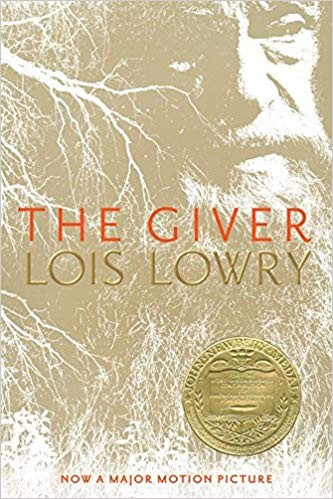
Cover of The Giver

book

The Giver

Age rating, content warnings & parent guide

Lois Lowry · 1993

Is The Giver appropriate for your child? See the reviewed age guidance, content cautions, positive themes, and supporting evidence below.

Explore the age guidance, content cautions, positive qualities, and supporting notes for The Giver by Lois Lowry. This book is recommended for ages 13+; content notes include Death of a character, Frightening scenes, Violence; positive qualities include Courage & resilience, Positive messages.

Ages 13+Book 1 · The QuartetSource checked

Why this age? The prose is accessible to many middle-school readers, but the story includes infant killing, suicide, war memories, euthanasia, emotional deprivation, starvation, and morally complex questions about freedom and society. This is guidance, not a safety guarantee; reading level and family context may differ.

Where to get it

As an Amazon Associate and Bookshop.org affiliate, Dickens & Rumi may earn a small commission from qualifying purchases, at no extra cost to you.

10-second decision

Is this likely to fit your family?

Age guidanceAges 13+
Strongest cautionsDeath of a character 4/5 · Frightening scenes 3/5 · Violence 3/5
Strongest positivesCourage & resilience 5/5 · Positive messages 5/5
Series positionBook 1 · The Quartet
Recommendation4.5/5

Courage & resilience; strongest caution: death of a character.

This is the quick scan. Open the evidence and methodology below for the basis behind each rating.

Quick context

What parents should know

The prose is accessible to many middle-school readers, but the story includes infant killing, suicide, war memories, euthanasia, emotional deprivation, starvation, and morally complex questions about freedom and society. This is guidance, not a safety guarantee; reading level and family context may differ. Courage & resilience; strongest caution: death of a character.

Readiness snapshotAge guidance: 13+Main watch-out: Death of a character 4/5
Recommendation 4.5/5

Editorial rating

How this review was built

Dickens & Rumi editorial
Source checkedPublication method
16Scored categories
16Evidence notes
0Explicit 0/5 checks
Nov 3, 2026Last updated

Dickens & Rumi describes what is present; families decide what matters to them. Community reactions are kept separate from official content ratings.

Review depth16 scored categories16 evidence notes
Show Wikipedia summary

Open to load a short Wikipedia summary.

Quick view

At a glance

Recommended age13+

Strongest cautions

  • Death of a character4/5
  • Frightening scenes3/5
  • Violence3/5

Strongest positives

  • Courage & resilience5/5
  • Positive messages5/5
  • Creativity & curiosity4/5

Reading order

Series progression

All known volumes are shown. Reviewed books include age guidance and cautions; books still being reviewed are clearly marked.

Next volumeBook 2 · Gathering BlueStrongest cautions: Death of a character 4/5 · Frightening scenes 4/5Open next review →
  1. Book 1 · The GiverAges 13+
    Death of a character4/5Frightening scenes3/5Violence3/5Graphic injury2/5Alcohol or drugs1/5Religious themes1/5Romance1/5Sexual content & nudity1/5Strong language1/5
    Starting point
  2. Book 2 · Gathering Blue
    Death of a character4/5Frightening scenes4/5Violence3/5Graphic injury2/5Religious themes1/5Romance1/5Strong language1/5
    About the same

Keep going

What should you do next?

One review should lead naturally to the next useful choice.

Similar, with lighter cautions

Want something gentler?

These reviewed titles have overlapping age guidance and a lower total caution score than The Giver. Open each review for the details.

What’s in it?

Death of a character4/5
Why this rating?

Death is a central theme, including euthanasia, suicide, and the potential death of the protagonist.

Graphic injury2/5
Why this rating?

Death and killing are described in disturbing detail, but graphic blood and bodily injury are limited rather than emphasized.

Strong language1/5
Why this rating?

Language is very clean and formal, consistent with the tone of the community.

Religious themes1/5
Why this rating?

The community is secular; religion is not a factor in their society.

Romance1/5
Why this rating?

Minor mentions of stirrings and social expectations; minimal romantic focus.

Frightening scenes3/5
Why this rating?

The revelations about hidden killing, pursuit, deprivation, and the uncertain escape create sustained psychological tension.

Sexual content & nudity1/5
Why this rating?

Brief, abstract references to 'stirrings' as a physiological sensation requiring treatment.

Alcohol or drugs1/5
Why this rating?

Rosemary dies using poison; this is suicide-related rather than recreational substance use.

Violence3/5
Why this rating?

War memories, lethal injections, institutional killing, and threats to Jonas and Gabriel are important plot elements, though violence is not constant.

What’s good in it?

Courage & resilience5/5
Why this rating?

Jonas displays significant bravery by challenging the entire structure of his society.

Creativity & curiosity4/5
Why this rating?

Highly imaginative exploration of how a world would function without history, color, or deep emotion.

Diverse representation2/5
Why this rating?

The book critiques enforced sameness and values individual difference, but its community intentionally suppresses visible and cultural diversity.

Educational value4/5
Why this rating?

The novel supports discussion of ethics, civics, history, social control, memory, equality, eugenics, and moral reasoning.

Kindness & empathy3/5
Why this rating?

Care for infants, attachment, empathy, and sacrifice matter greatly, even as the society disguises cruelty as orderly care.

Positive messages5/5
Why this rating?

Strong focus on the importance of human emotion, memory, individuality, and personal responsibility.

Good role models4/5
Why this rating?

Jonas and the Giver show empathy, moral growth, responsibility, and courage, though their choices involve serious risks and ambiguity.

Family discussion

Talk about it

Conversation starters based on this title’s published content notes.

  1. What did courage look like in this story? Was being brave always the same as being fearless?
  2. How did the story approach death or loss? What helped the characters cope?
  3. Which choice in The Giver would you have made differently, and why?
  4. Who changed the most in The Giver, and what caused that change?
Discuss this title with other parents

Community perspective — separate from editorial ratings

What families noticed

Community signal

Community ratings and written reactions are a separate layer. They do not automatically change Dickens & Rumi’s official age guidance or content scores.

Add your perspective

Sign in from the homepage to rate this title.

If you liked this

Try something nearby

Related by age fit, format, and catalogue context.

These content notes are a starting point, not a guarantee. Review the evidence and use your own judgment before choosing a title.

Something wrong with this guide? Report age, caution, series, cover, or title issues.