Dickens & Rumi
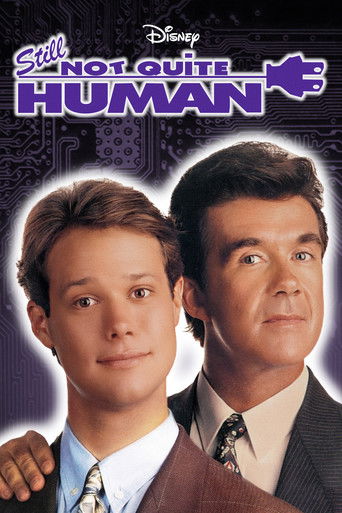
Cover of Still Not Quite Human

film

Still Not Quite Human

Age rating, content warnings & parent guide

1992

Is Still Not Quite Human appropriate for your child? See the reviewed age guidance, content cautions, positive themes, and supporting evidence below.

In the final film of the series, Chip and his "father" attend a robotics convention. Here, Dr. Carson is kidnapped and replaced by an android. Can Chip and his newfound friends save Dr. Carson from a dangerous competitor?

Source checked

Where to watch or buy

As an Amazon Associate, Dickens & Rumi may earn from qualifying purchases, at no extra cost to you.

10-second decision

Is this likely to fit your family?

Age guidanceNot listed
Strongest cautionsFrightening scenes 3/5 · Violence 3/5 · Products & advertising 1/5
Strongest positivesCourage & resilience 4/5 · Creativity & curiosity 4/5
Recommendation3.5/5

Courage & resilience; strongest caution: frightening scenes.

This is the quick scan. Open the evidence and methodology below for the basis behind each rating.

Quick context

What parents should know

Courage & resilience; strongest caution: frightening scenes.

Readiness snapshotMain watch-out: Frightening scenes 3/5
Recommendation 3.5/5

Editorial rating

How this review was built

Dickens & Rumi editorial
Source checkedPublication method
12Scored categories
12Evidence notes
0Explicit 0/5 checks
Oct 24, 2026Last updated

Dickens & Rumi describes what is present; families decide what matters to them. Community reactions are kept separate from official content ratings.

Review depth12 scored categories12 evidence notes

Quick view

At a glance

Recommended ageNot listed

Strongest cautions

  • Frightening scenes3/5
  • Violence3/5
  • Products & advertising1/5

Strongest positives

  • Courage & resilience4/5
  • Creativity & curiosity4/5
  • Good role models3/5

Keep going

What should you do next?

One review should lead naturally to the next useful choice.

What’s in it?

Products & advertising1/5
Why this rating?

The story centers on a robotics convention and android technology, but the supplied material does not indicate product placement or pressure to buy products.
Strong language1/5
Why this rating?

No specific strong language is reported. A mild family-film rating is most consistent with the available information, but dialogue coverage is limited.

Romance1/5
Why this rating?

Romance is peripheral: Aunt Mildred is attracted to Bonus and begins a relationship with him.

Frightening scenes3/5
Why this rating?

Kidnapping, replacement by an android, guarded-estate infiltration, laserfire, explosions, and a dangerous robot fight create sustained but not extreme peril.

Violence3/5
Why this rating?

A kidnapping, pursuit, guards, criminal threats, and a sustained fight between androids include laserfire, impacts, throwing, and an explosive defeat.

What’s good in it?

Courage & resilience4/5
Why this rating?

Chip knowingly faces a dangerous prototype to rescue his father, while friends and Kate risk arrest or danger to help him.

Creativity & curiosity4/5
Why this rating?

Android identity, reprogramming, disguises, rescue planning, and inventive robotics provide rich imaginative problem-solving and science-fiction play.

Diverse representation2/5
Why this rating?

Features a decent variety of character roles, though limited by 1990s TV norms.

Educational value1/5
Why this rating?

Robotics and android concepts provide light science-fiction interest, but teaching real knowledge is not the main purpose.

Kindness & empathy3/5
Why this rating?

Friendship, family care, forgiveness, and cooperation are important to the rescue, including Chip helping Bonus and Kyle assisting the group.

Positive messages3/5
Why this rating?

The story supports loyalty, trust, family bonds, honesty, cooperation, and valuing people over reputation or using technology to build weapons.

Good role models3/5
Why this rating?

Chip protects his father, Kate helps redirect Kyle toward honesty, and Jonas chooses trust over saving face; some characters are criminals or exploitative.

Family discussion

Talk about it

Conversation starters based on this title’s published content notes.

  1. What did courage look like in this story? Was being brave always the same as being fearless?
  2. Which moment felt most tense or frightening? What helped the characters handle fear?
  3. Which choice in Still Not Quite Human would you have made differently, and why?
  4. Who changed the most in Still Not Quite Human, and what caused that change?
Discuss this title with other parents

Community perspective — separate from editorial ratings

What families noticed

Community signal

Community ratings and written reactions are a separate layer. They do not automatically change Dickens & Rumi’s official age guidance or content scores.

Add your perspective

Sign in from the homepage to rate this title.

These content notes are a starting point, not a guarantee. Review the evidence and use your own judgment before choosing a title.

Something wrong with this guide? Report age, caution, series, cover, or title issues.