Dickens & Rumi
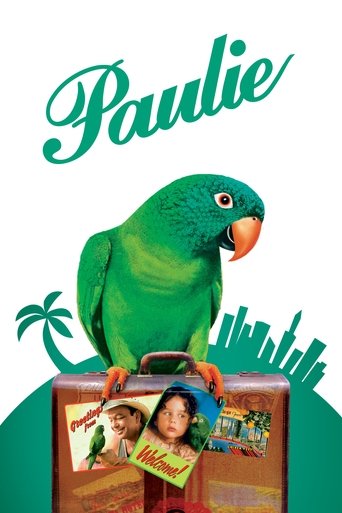
Cover of Paulie

film

Paulie

Age rating, content warnings & parent guide

1998

Is Paulie appropriate for your child? See the reviewed age guidance, content cautions, positive themes, and supporting evidence below.

Paulie, a talking parrot, recounts his travels looking for his original owner to a Russian janitor who helps him to the end of his journey.

Source checked

Where to watch or buy

As an Amazon Associate, Dickens & Rumi may earn from qualifying purchases, at no extra cost to you.

10-second decision

Is this likely to fit your family?

Age guidanceNot listed
Strongest cautionsDeath of a character 2/5 · Frightening scenes 2/5 · Violence 2/5
Strongest positivesKindness & empathy 4/5 · Positive messages 4/5
Recommendation3.5/5

Kindness & empathy; strongest caution: death of a character.

This is the quick scan. Open the evidence and methodology below for the basis behind each rating.

Quick context

What parents should know

Kindness & empathy; strongest caution: death of a character.

Readiness snapshotMain watch-out: Death of a character 2/5
Recommendation 3.5/5

Editorial rating

How this review was built

Dickens & Rumi editorial
Source checkedPublication method
13Scored categories
13Evidence notes
1Explicit 0/5 checks
Oct 23, 2026Last updated

Dickens & Rumi describes what is present; families decide what matters to them. Community reactions are kept separate from official content ratings.

Review depth13 scored categories13 evidence notes

Quick view

At a glance

Recommended ageNot listed

Strongest cautions

  • Death of a character2/5
  • Frightening scenes2/5
  • Violence2/5

Strongest positives

  • Kindness & empathy4/5
  • Positive messages4/5
  • Courage & resilience3/5

Keep going

What should you do next?

One review should lead naturally to the next useful choice.

What’s in it?

Death of a character2/5
Why this rating?

Ivy, a caring owner, eventually dies, and the story includes grief and repeated separations, though death is not presented graphically.
Strong language1/5
Why this rating?

Features mild language such as 'wisecracking' and insults, but nothing crude or offensive.

Romance1/5
Why this rating?

Minor romantic elements, including Paulie's affection for another bird and the human janitor's infatuation with the girl.

Frightening scenes2/5
Why this rating?

Separation, captivity, animal testing, criminal danger, police pursuit, and a near-death fall may be tense or upsetting for younger viewers.

Violence2/5
Why this rating?

Threats include a near-fall, kidnapping, a jewel theft, escape confrontations, police involvement, and pecking; violence is limited and not graphically depicted.

Checked and not flagged

No concern recorded in these categories

These categories were explicitly scored 0/5 in the published review. This is not a guarantee that every edition or reader experience is identical.

Products & advertising · 0/5

What’s good in it?

Courage & resilience3/5
Why this rating?

Paulie persists through abandonment and captivity, learns to fly, and seeks freedom; Misha confronts cruelty and helps him escape.

Creativity & curiosity3/5
Why this rating?

A talking parrot's imaginative journey, inventive escapes, performances, and problem-solving strongly encourage imaginative engagement.

Diverse representation2/5
Why this rating?

The cast features a multi-ethnic background, including a Russian immigrant and Latino representation.

Educational value1/5
Why this rating?

Incidental lessons on animal intelligence and empathy.

Kindness & empathy4/5
Why this rating?

Care and empathy are central: Paulie supports Ivy, Misha protects him, and characters work toward reunion and freedom.

Positive messages4/5
Why this rating?

Strong themes support loyalty, compassion, freedom, perseverance, truthful care, and rejecting exploitation of vulnerable beings.

Good role models3/5
Why this rating?

Misha shows empathy and courage, and Ivy offers care; selfish adults exploit Paulie, providing clear contrasts rather than idealized behavior.

Family discussion

Talk about it

Conversation starters based on this title’s published content notes.

  1. Where did a character show kindness or empathy, and what changed because of it?
  2. How did the story approach death or loss? What helped the characters cope?
  3. Which choice in Paulie would you have made differently, and why?
  4. Who changed the most in Paulie, and what caused that change?
Discuss this title with other parents

Community perspective — separate from editorial ratings

What families noticed

Community signal

Community ratings and written reactions are a separate layer. They do not automatically change Dickens & Rumi’s official age guidance or content scores.

Add your perspective

Sign in from the homepage to rate this title.

These content notes are a starting point, not a guarantee. Review the evidence and use your own judgment before choosing a title.

Something wrong with this guide? Report age, caution, series, cover, or title issues.