Dickens & Rumi
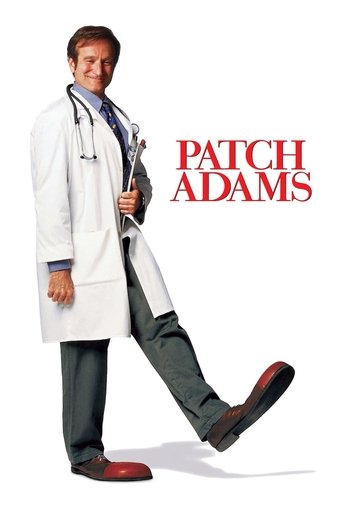
Cover of Patch Adams

film

Patch Adams

Age rating, content warnings & parent guide

1998

Is Patch Adams appropriate for your child? See the reviewed age guidance, content cautions, positive themes, and supporting evidence below.

The true story of Dr. Hunter "Patch" Adams, who in the 1970s found that humor is the best medicine, and was willing to do just anything to make his patients laugh—even if it meant risking his own career.

Source checked

Where to watch or buy

As an Amazon Associate, Dickens & Rumi may earn from qualifying purchases, at no extra cost to you.

10-second decision

Is this likely to fit your family?

Age guidanceNot listed
Strongest cautionsDeath of a character 4/5 · Frightening scenes 3/5 · Violence 3/5
Strongest positivesKindness & empathy 5/5 · Courage & resilience 4/5
Recommendation4.3/5

Kindness & empathy; strongest caution: death of a character.

This is the quick scan. Open the evidence and methodology below for the basis behind each rating.

Quick context

What parents should know

Kindness & empathy; strongest caution: death of a character.

Readiness snapshotMain watch-out: Death of a character 4/5
Recommendation 4.3/5

Editorial rating

How this review was built

Dickens & Rumi editorial
Source checkedPublication method
17Scored categories
17Evidence notes
0Explicit 0/5 checks
Oct 24, 2026Last updated

Dickens & Rumi describes what is present; families decide what matters to them. Community reactions are kept separate from official content ratings.

Review depth17 scored categories17 evidence notes

Quick view

At a glance

Recommended ageNot listed

Strongest cautions

  • Death of a character4/5
  • Frightening scenes3/5
  • Violence3/5

Strongest positives

  • Kindness & empathy5/5
  • Courage & resilience4/5
  • Creativity & curiosity4/5

Keep going

What should you do next?

One review should lead naturally to the next useful choice.

What’s in it?

Products & advertising1/5
Why this rating?

The story centers on medicine, compassion, and a charitable clinic rather than branded products or buying pressure.

Death of a character4/5
Why this rating?

The film deals heavily with suicidal ideation, grief, and the tragic murder of a central character.

Graphic injury1/5
Why this rating?

The aftermath of the murder-suicide is implied rather than graphically displayed, but the subject matter is intense.

Strong language2/5
Why this rating?

Some mild-to-moderate profanity or verbal insults occur, but strong language is not a prominent feature.

Religious themes2/5
Why this rating?

Adams asks God for an explanation during a crisis, but religious practice is not a central focus.

Romance2/5
Why this rating?

A romantic relationship develops between the protagonist and a classmate, serving as an emotional anchor for the plot.

Frightening scenes3/5
Why this rating?

Mental-institution scenes, suicidal crises, a disturbed patient, and a sudden shooting may be distressing.

Sexual content & nudity2/5
Why this rating?

Includes brief, non-sexual full-frontal nudity during the graduation sequence and references to past child sexual abuse.

Alcohol or drugs1/5
Why this rating?

Substance use appears minimal and incidental, with no indication that drug use or intoxication is a major theme.

Violence3/5
Why this rating?

The central violent event is a sudden shotgun murder followed by suicide; other conflict is mostly verbal or nonviolent.

What’s good in it?

Courage & resilience4/5
Why this rating?

Adams persists through mental-health struggles, institutional opposition, grief, and professional risk to pursue compassionate care.

Creativity & curiosity4/5
Why this rating?

Extremely creative use of humor, performance, and non-traditional methods to solve medical and emotional challenges.

Diverse representation2/5
Why this rating?

Features a diverse range of patients in the hospital setting.

Educational value2/5
Why this rating?

The film offers accessible insight into medical training, mental health, patient care, and debates over medical ethics.

Kindness & empathy5/5
Why this rating?

Kindness, compassion, and humor as healing tools are the central thematic pillars of the work.

Positive messages4/5
Why this rating?

It strongly promotes compassion, humor, patient dignity, and treating people holistically, while also raising questions about rules and responsibility.

Good role models3/5
Why this rating?

The protagonist displays deep dedication to humanity, though his methods sometimes border on the unprofessional.

Family discussion

Talk about it

Conversation starters based on this title’s published content notes.

  1. Where did a character show kindness or empathy, and what changed because of it?
  2. How did the story approach death or loss? What helped the characters cope?
  3. Which choice in Patch Adams would you have made differently, and why?
  4. Who changed the most in Patch Adams, and what caused that change?
Discuss this title with other parents

Community perspective — separate from editorial ratings

What families noticed

Community signal

Community ratings and written reactions are a separate layer. They do not automatically change Dickens & Rumi’s official age guidance or content scores.

Add your perspective

Sign in from the homepage to rate this title.

These content notes are a starting point, not a guarantee. Review the evidence and use your own judgment before choosing a title.

Something wrong with this guide? Report age, caution, series, cover, or title issues.