Dickens & Rumi
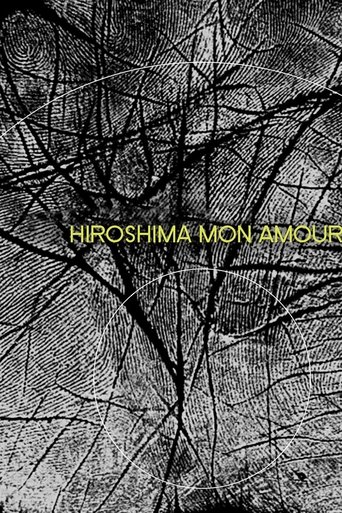
Cover of Hiroshima Mon Amour

film

Hiroshima Mon Amour

1959

The deep conversation between a Japanese architect and a French actress forms the basis of this celebrated French film, considered one of the vanguard productions of the French New Wave. Set in Hiroshima after the end of World War II, the couple -- lovers turned friends -- recount, over many hours, previous romances and life experiences. The two intertwine their stories about the past with pondering the devastation wrought by the atomic bomb dropped on the city.

Ages 16+Source checked

Why this age? Recommended for older teens because of implied sexual activity, extramarital affairs, wartime trauma, death, atomic-bomb imagery, grief, and psychologically complex nonlinear storytelling. This is guidance, not a safety guarantee; reading level and family context may differ.

Quick view

At a glance

Recommended age16+

Strongest cautions

  • Romance5/5
  • Death of a character4/5
  • Sexual content & nudity3/5

Strongest positives

  • Creativity & curiosity5/5
  • Positive messages5/5
  • Courage & resilience3/5

What’s in it?

Death of a character4/5
Why this rating?

Central to the plot is the death of the protagonist's lover and the mass death of the architect's family during the atomic bombing.
Graphic injury2/5
Why this rating?

Documentary-style footage of radiation victims and the consequences of the atomic blast is shown; the imagery is somber and disturbing rather than slasher-style gore.

Strong language1/5
Why this rating?

The supplied dialogue and plot descriptions show sophisticated, non-profane language. Some verbal conflict appears, but strong profanity is not indicated.

Romance5/5
Why this rating?

The film is entirely centered on intense, complex, and transient romantic relationships, including themes of infidelity.

Frightening scenes2/5
Why this rating?

The film is intense and melancholic, featuring disturbing imagery of post-war destruction that may be upsetting for younger viewers.

Sexual content & nudity3/5
Why this rating?

The protagonists have sex, including an extramarital encounter; the treatment is mature and intimate but not described as graphically explicit.

Alcohol or drugs2/5
Why this rating?

Adult characters are depicted smoking and drinking socially, without evidence that use is aimed at children or strongly glamorized.

Violence2/5
Why this rating?

War and bombing violence are discussed and shown through historical and fictional imagery; a soldier is shot and dies, without action-style violence.

What’s good in it?

Courage & resilience3/5
Why this rating?

The woman confronts traumatic memories and shame, while both characters risk emotional vulnerability in discussing war, loss, and love.

Creativity & curiosity5/5
Why this rating?

The film is a masterpiece of experimental cinema, using non-linear narrative and editing techniques that revolutionized filmmaking.

Diverse representation2/5
Why this rating?

The central relationship crosses French and Japanese national and cultural experiences, with both protagonists given interiority and agency.

Educational value3/5
Why this rating?

It offers substantial historical and cultural reflection on Hiroshima, occupation, wartime memory, and the French New Wave's cinematic form.

Kindness & empathy2/5
Why this rating?

The lovers listen to and offer emotional recognition of each other's pain, but their affair also causes conflict and does not resolve neatly.

Positive messages5/5
Why this rating?

The film deeply explores war’s devastation, memory, grief, guilt, moral complexity, and the difficulty of understanding another person’s trauma.

Good role models2/5
Why this rating?

The adults are emotionally reflective but engage in adultery and evasive choices; the film presents complexity rather than straightforward models to imitate.

Family discussion

Talk about it

Conversation starters based on this title’s published content notes.

  1. What was the most imaginative idea in the story, and what would you add to it?
  2. How did relationships or romance affect the characters’ choices?
  3. Which choice in Hiroshima Mon Amour would you have made differently, and why?
  4. Who changed the most in Hiroshima Mon Amour, and what caused that change?
Discuss this title with other parents

Community reactions

What families noticed

Add your perspective

Sign in from the homepage to rate this title.

Where to watch or buy

As an Amazon Associate, Dickens & Rumi may earn from qualifying purchases, at no extra cost to you.

These content notes are a starting point, not a guarantee. Review the evidence and use your own judgment before choosing a title.

Report an incorrect rating