Dickens & Rumi
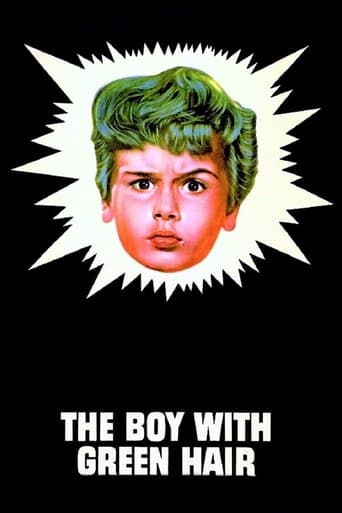
Cover of The Boy with Green Hair

film

The Boy with Green Hair

1948

Peter, an orphaned boy, is adopted by Gramp Frye after his parents are killed in Europe while doing war relief work. The boy feels safe with his new caretaker, but when he is taunted for being an orphan, he gets demoralized. The next day Peter wakes up with green hair. Embarrassed and further ridiculed, Peter seeks solace in a nearby forest. To his surprise, he finds other orphans in the woods, who encourage him to spread news of the injustices of war.

Ages 8+Source checked

Why this age? The film includes the death of Peter’s parents, orphanhood, bullying, fear of another war, and some threatening pursuit, but presents these themes in a relatively gentle, symbolic family-film style. This is guidance, not a safety guarantee; reading level and family context may differ.

Quick view

At a glance

Recommended age8+

Strongest cautions

  • Death of a character3/5
  • Frightening scenes2/5
  • Violence2/5

Strongest positives

  • Courage & resilience4/5
  • Positive messages4/5
  • Creativity & curiosity3/5

Keep going

What should you do next?

One review should lead naturally to the next useful choice.

What’s in it?

Death of a character3/5
Why this rating?

The death of the protagonist's parents in the war is the central motivation, though not graphically depicted.

Strong language1/5
Why this rating?

Mild verbal teasing and ostracization from peers.

Frightening scenes2/5
Why this rating?

Some mild tension regarding the protagonist's isolation and being hunted by peers.

Violence2/5
Why this rating?

Occasional scenes of bullying and children chasing the protagonist to cut his hair.

What’s good in it?

Courage & resilience4/5
Why this rating?

Peter returns to his community and resolves to share a difficult peace message despite ridicule and pressure to conform.

Creativity & curiosity3/5
Why this rating?

The mysterious green hair, symbolic forest, and dreamlike fantasy encourage imaginative interpretation and make individuality visually memorable.

Diverse representation2/5
Why this rating?

The film includes war orphans connected to Europe and Asia and values difference, but offers limited broader representation and character detail.

Educational value2/5
Why this rating?

The film offers historical and moral context about war orphans, the effects of war on children, and social conformity, though education is not its primary format.

Kindness & empathy3/5
Why this rating?

Gramp gives Peter a safe home, the psychologist listens, and orphan children encourage Peter to speak for others affected by war.

Positive messages4/5
Why this rating?

Strong themes of individuality, social justice, and the importance of empathy for orphans.

Good role models3/5
Why this rating?

The grandfather is a positive role model; the protagonist shows courage in standing up for beliefs.

Family discussion

Talk about it

Conversation starters based on this title’s published content notes.

  1. What did courage look like in this story? Was being brave always the same as being fearless?
  2. How did the story approach death or loss? What helped the characters cope?
  3. Which choice in The Boy with Green Hair would you have made differently, and why?
  4. Who changed the most in The Boy with Green Hair, and what caused that change?
Discuss this title with other parents

Community reactions

What families noticed

Add your perspective

Sign in from the homepage to rate this title.

Where to watch or buy

As an Amazon Associate, Dickens & Rumi may earn from qualifying purchases, at no extra cost to you.

These content notes are a starting point, not a guarantee. Review the evidence and use your own judgment before choosing a title.

Something wrong with this guide? Report age, caution, series, cover, or title issues.