Dickens & Rumi
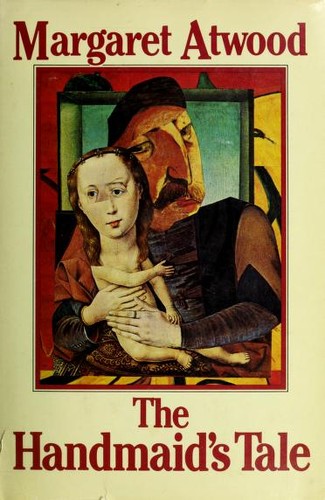
Cover of The Handmaid's Tale

book

The Handmaid's Tale

Margaret Atwood · 1985

Explore the age guidance, content cautions, positive qualities, and supporting notes for The Handmaid's Tale by Margaret Atwood. This book is recommended for ages 18+; content notes include Religious themes, Sexual content & nudity, Death of a character; positive qualities include Positive messages, Courage & resilience.

Ages 18+Source checked

Why this age? Recommended for adults because of repeated sexual violence and coercion, reproductive enslavement, authoritarian oppression, family separation, threats, and complex trauma-focused themes. This is guidance, not a safety guarantee; reading level and family context may differ.

Quick view

At a glance

Recommended age18+

Strongest cautions

  • Religious themes5/5
  • Sexual content & nudity5/5
  • Death of a character4/5

Strongest positives

  • Positive messages5/5
  • Courage & resilience4/5
  • Creativity & curiosity4/5

What’s in it?

Death of a character4/5
Why this rating?

The coup includes the assassination of the president and Congress; disappearance, punishment, and possible death remain recurring threats.
Graphic injury2/5
Why this rating?

Descriptions of violence are clinical and chilling rather than gratuitous, but include graphic accounts of hangings and body mutilation.

Strong language2/5
Why this rating?

Language is generally formal or oppressive, with some occasional harsh or derogatory terms used in the context of the regime.

LGBTQIA characters2/5
Why this rating?

The novel includes lesbian characters and references to same-sex relationships, but LGBTQIA identities and relationships remain a secondary element rather than a central focus.

Religious themes5/5
Why this rating?

A fundamentalist theonomic government uses biblical interpretations, religious hierarchy, and scripture-inspired rules to justify control.

Romance2/5
Why this rating?

Offred’s relationship with Nick has emotional and sexual intimacy, but romance is secondary to survival, coercion, and political oppression.

Frightening scenes4/5
Why this rating?

Constant surveillance, secret police, forced pregnancy, possible execution, arrest, and uncertain escape create sustained psychological tension.

Sexual content & nudity5/5
Why this rating?

Sexual exploitation is central, including ritualized rape, coerced intercourse, pregnancy, a brothel, and sexual relationships shaped by unequal power.

Alcohol or drugs1/5
Why this rating?

Minimal focus on substances, though the regime strictly controls all aspects of life.

Violence4/5
Why this rating?

Political assassinations, authoritarian punishment, coercion, threats, imprisonment, and resistance appear throughout; violence is serious rather than playful.

What’s good in it?

Courage & resilience4/5
Why this rating?

Survival, preserving identity, resisting indoctrination, forming alliances, and taking risks under tyranny are central expressions of courage.

Creativity & curiosity4/5
Why this rating?

Offred’s storytelling, memory, coded resistance, wordplay, and the novel’s reconstructed historical form encourage imaginative and critical thinking.

Diverse representation2/5
Why this rating?

Focuses on the experiences of women within a specific, exclusionary, and racist regime structure.

Educational value3/5
Why this rating?

Offers substantial insight into authoritarian systems, gender oppression, propaganda, religious extremism, resistance, memory, and historical interpretation.

Kindness & empathy2/5
Why this rating?

Kindness is rare and often dangerous; characters find small moments of compassion within a harsh system.

Positive messages5/5
Why this rating?

Strongly critiques authoritarianism, misogyny, reproductive control, enforced ideology, historical denial, and the loss of individual freedom.

Good role models3/5
Why this rating?

Offred, Moira, Ofglen, and others show resistance, adaptability, and moral agency, though choices occur under coercion and are morally complicated.

Family discussion

Talk about it

Conversation starters based on this title’s published content notes.

  1. What message do you think the story most wants you to remember?
  2. What beliefs or religious ideas appear in the story? How do they influence the characters?
  3. Which choice in The Handmaid's Tale would you have made differently, and why?
  4. Who changed the most in The Handmaid's Tale, and what caused that change?
Discuss this title with other parents

Community reactions

What families noticed

Add your perspective

Sign in from the homepage to rate this title.

Where to get it

As an Amazon Associate and Bookshop.org affiliate, Dickens & Rumi may earn a small commission from qualifying purchases, at no extra cost to you.

If you liked this

Try something nearby

Related by age fit, format, and catalogue context.

These content notes are a starting point, not a guarantee. Review the evidence and use your own judgment before choosing a title.

Report an incorrect rating