Dickens & Rumi
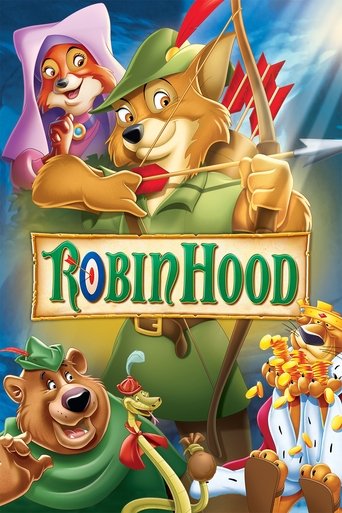
Cover of Robin Hood

film

Robin Hood

1973

With King Richard off to the Crusades, Prince John and his slithering minion, Sir Hiss, set about taxing Nottingham's citizens with support from the corrupt sheriff - and staunch opposition by the wily Robin Hood and his band of merry men.

Source checked

Quick view

At a glance

Recommended ageNot listed

Strongest cautions

  • Frightening scenes2/5
  • Romance2/5
  • Violence2/5

Strongest positives

  • Courage & resilience4/5
  • Kindness & empathy4/5
  • Creativity & curiosity3/5

What’s in it?

Products & advertising1/5
Why this rating?

As a classic Disney film, it is part of a broad range of merchandise, but the film itself is not an advertisement.

Strong language1/5
Why this rating?

Mild insults, teasing, and villainous name-calling occur, without strong profanity.

Religious themes1/5
Why this rating?

The Crusades and King Richard provide historical background, but religious belief and practice are not prominent themes.

Romance2/5
Why this rating?

Robin and Maid Marian share a gentle, recurring romantic relationship with affection and a few kisses.

Frightening scenes2/5
Why this rating?

Villains, threats, imprisonment, pursuit, and occasional peril may briefly frighten young viewers, but the tone stays playful.

Alcohol or drugs1/5
Why this rating?

There is a brief tavern scene with background characters drinking, but it is not a focus of the film.

Violence2/5
Why this rating?

Stylized cartoon fights, archery, arrests, escapes, and slapstick peril occur without realistic injury detail.

What’s good in it?

Courage & resilience4/5
Why this rating?

Characters face unjust authority and danger with bravery, loyalty, and clever planning rather than only force.

Creativity & curiosity3/5
Why this rating?

Anthropomorphic animals, inventive schemes, music, humor, and imaginative world-building strongly encourage playful creativity.

Diverse representation1/5
Why this rating?

The cast is primarily anthropomorphic animals; it offers varied animal characters but limited human cultural or identity representation.

Educational value1/5
Why this rating?

It offers light exposure to the Robin Hood legend and medieval-style social hierarchy, but teaching is not its main purpose.

Kindness & empathy4/5
Why this rating?

Sharing, helping poor citizens, friendship, and care for loved ones are recurring positive behaviors.

Positive messages3/5
Why this rating?

Strong themes support fairness, resisting corruption, helping the oppressed, loyalty, and using cleverness responsibly.

Good role models3/5
Why this rating?

Robin and his friends model generosity, loyalty, courage, and opposition to injustice, despite Robin’s outlaw status.

Family discussion

Talk about it

Conversation starters based on this title’s published content notes.

  1. What did courage look like in this story? Was being brave always the same as being fearless?
  2. Which moment felt most tense or frightening? What helped the characters handle fear?
  3. Which choice in Robin Hood would you have made differently, and why?
  4. Who changed the most in Robin Hood, and what caused that change?
Discuss this title with other parents

Community reactions

What families noticed

Add your perspective

Sign in from the homepage to rate this title.

Where to watch or buy

As an Amazon Associate, Dickens & Rumi may earn from qualifying purchases, at no extra cost to you.

These content notes are a starting point, not a guarantee. Review the evidence and use your own judgment before choosing a title.

Report an incorrect rating