Dickens & Rumi
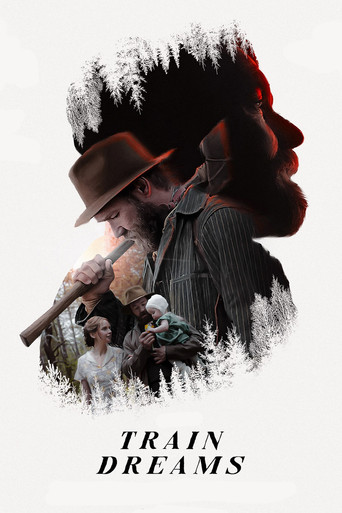
Cover of Train Dreams

film

Train Dreams

2025

A logger leads a life of quiet grace as he experiences love and loss during an era of monumental change in early 20th-century America.

Ages 15+Source checked

Why this age? Frequent deaths, racial violence, fatal workplace accidents, wildfire-related loss, grief, haunting imagery, and mature emotional themes make this better suited to older teens, despite limited evidence of sexual content. This is guidance, not a safety guarantee; reading level and family context may differ.

Quick context

What parents should know

Frequent deaths, racial violence, fatal workplace accidents, wildfire-related loss, grief, haunting imagery, and mature emotional themes make this better suited to older teens, despite limited evidence of sexual content. This is guidance, not a safety guarantee; reading level and family context may differ. Courage & resilience; strongest caution: death of a character.

Readiness snapshotAge guidance: 15+Main watch-out: Death of a character 5/5
Recommendation 3/5
Review depth15 scored categories15 evidence notes

Quick view

At a glance

Recommended age15+

Strongest cautions

  • Death of a character5/5
  • Frightening scenes3/5
  • Romance3/5

Strongest positives

  • Courage & resilience3/5
  • Creativity & curiosity3/5
  • Good role models3/5

Keep going

What should you do next?

One review should lead naturally to the next useful choice.

What’s in it?

Death of a character5/5
Why this rating?

Death is a central theme, involving the loss of a spouse and child, as well as multiple workplace fatalities.

Graphic injury2/5
Why this rating?

Injuries from industrial accidents and a murder are depicted but are not gratuitously graphic.

Strong language2/5
Why this rating?

The period logging and railroad setting may include occasional coarse language, but no specific words or frequent strong language are documented.

Religious themes1/5
Why this rating?

Spirits and folk-belief elements appear in Robert’s grief and visions, but formal religious practice or doctrine is not central.

Romance3/5
Why this rating?

Marriage, family love, bereavement, and a later emotional connection are important parts of Robert’s life story.

Frightening scenes3/5
Why this rating?

Tragic deaths, haunting visions, a devastating wildfire, and an injured girl create sustained unease, though this is a somber drama rather than conventional horror.

Alcohol or drugs1/5
Why this rating?

Incidental period-appropriate drinking is plausible, but the supplied material gives no details suggesting frequent use or glamorization.

Violence3/5
Why this rating?

Includes a worker thrown from a bridge, a vigilante killing, fatal logging accidents, and implied racial violence; the treatment appears serious rather than action-focused.

What’s good in it?

Courage & resilience3/5
Why this rating?

Robert repeatedly endures dangerous work, bereavement, social change, and profound isolation while continuing to care for others and rebuild his life.

Creativity & curiosity3/5
Why this rating?

Poetic narration, dreams, memory, nature, and the film’s reflective structure encourage imagination and contemplation more than practical problem-solving.

Diverse representation2/5
Why this rating?

Includes some portrayal of the multi-ethnic workforce in the American West.

Educational value2/5
Why this rating?

The period setting offers insight into logging, railroads, immigration-era prejudice, rural labor, technological change, and American history.

Kindness & empathy3/5
Why this rating?

Care appears in marriage, friendship, tending an injured woman, and companionship through grief, alongside a world containing cruelty and indifference.

Positive messages3/5
Why this rating?

The film emphasizes resilience, love, memory, accepting change, human connection, and finding meaning amid grief and hardship.

Good role models3/5
Why this rating?

Robert works hard, cares for family, supports others, and persists through grief, though his choices and emotional withdrawal are complex rather than idealized.

Family discussion

Talk about it

Conversation starters based on this title’s published content notes.

  1. What did courage look like in this story? Was being brave always the same as being fearless?
  2. How did the story approach death or loss? What helped the characters cope?
  3. Which choice in Train Dreams would you have made differently, and why?
  4. Who changed the most in Train Dreams, and what caused that change?
Discuss this title with other parents

Community reactions

What families noticed

Add your perspective

Sign in from the homepage to rate this title.

Where to watch or buy

As an Amazon Associate, Dickens & Rumi may earn from qualifying purchases, at no extra cost to you.

These content notes are a starting point, not a guarantee. Review the evidence and use your own judgment before choosing a title.

Something wrong with this guide? Report age, caution, series, cover, or title issues.