Dickens & Rumi
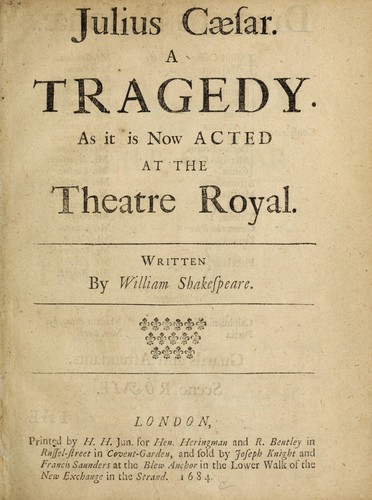
Cover of Julius Caesar

book

Julius Caesar

William Shakespeare · 1656

Explore the age guidance, content cautions, positive qualities, and supporting notes for Julius Caesar by William Shakespeare. This book is recommended for ages 13+; content notes include Death of a character, Violence, Frightening scenes; positive qualities include Courage & resilience, Creativity & curiosity.

Ages 13+Source checked

Why this age? Repeated violence, murder, suicide, war, grief, and political betrayal are central. The archaic language, rhetoric, and moral complexity also require substantial reading maturity. This is guidance, not a safety guarantee; reading level and family context may differ.

Quick view

At a glance

Recommended age13+

Strongest cautions

  • Death of a character5/5
  • Violence4/5
  • Frightening scenes3/5

Strongest positives

  • Courage & resilience4/5
  • Creativity & curiosity4/5
  • Educational value4/5

What’s in it?

Death of a character5/5
Why this rating?

Central to the plot are the assassinations and suicides of key characters.

Graphic injury2/5
Why this rating?

Blood and wounds may be mentioned or staged, but graphic bodily detail is limited.

Strong language3/5
Why this rating?

Insults, sexualized insults, threats, and harsh political rhetoric occur repeatedly, though modern profanity is limited.

Religious themes3/5
Why this rating?

Roman omens, gods, supernatural signs, and ritual beliefs strongly shape how characters interpret events.

Romance1/5
Why this rating?

Marriage and marital loyalty appear briefly, but romance is not a major focus.

Frightening scenes3/5
Why this rating?

Ghostly appearances, ominous signs, assassination plots, storms, and wartime danger may feel unsettling, though the play is not primarily horrifying.

Violence4/5
Why this rating?

Assassination, armed conflict, threats, riot, and civil war are central, though violence is usually described or staged without graphic detail.

What’s good in it?

Courage & resilience4/5
Why this rating?

Characters face political danger, public conflict, defeat, and death with conviction, though bravery is often mixed with pride or recklessness.

Creativity & curiosity4/5
Why this rating?

A masterpiece of language, structure, and characterization that has influenced literature for centuries.

Educational value4/5
Why this rating?

It offers substantial literary, rhetorical, historical, and civic material, especially when read with context about Rome and Shakespearean drama.

Kindness & empathy1/5
Why this rating?

Personal loyalty and compassion appear, but manipulation, suspicion, revenge, and political cruelty dominate the action.

Positive messages4/5
Why this rating?

It explores power, ambition, loyalty, rhetoric, political violence, civic duty, and the unintended consequences of moral choices.

Good role models3/5
Why this rating?

Characters show courage, loyalty, and public commitment, but also deception, vengeance, pride, and destructive misjudgment.

Family discussion

Talk about it

Conversation starters based on this title’s published content notes.

  1. What did courage look like in this story? Was being brave always the same as being fearless?
  2. How did the story approach death or loss? What helped the characters cope?
  3. Which choice in Julius Caesar would you have made differently, and why?
  4. Who changed the most in Julius Caesar, and what caused that change?
Discuss this title with other parents

Community reactions

What families noticed

Add your perspective

Sign in from the homepage to rate this title.

Where to get it

As an Amazon Associate and Bookshop.org affiliate, Dickens & Rumi may earn a small commission from qualifying purchases, at no extra cost to you.

If you liked this

Try something nearby

Related by age fit, format, and catalogue context.

These content notes are a starting point, not a guarantee. Review the evidence and use your own judgment before choosing a title.

Report an incorrect rating