Dickens & Rumi
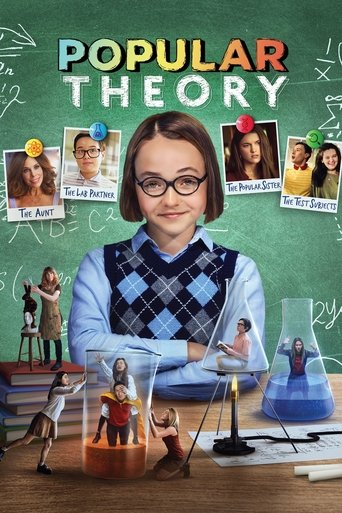
Cover of Popular Theory

film

Popular Theory

2024

Erwin, a girl genius, is the youngest student in high school. Unfortunately she struggles with social isolation. When she meets fellow science guru, Winston, they team up to invent a chemical that changes the high school hierarchy forever.

Source checked

Quick view

At a glance

Recommended ageNot listed

Strongest cautions

  • Romance1/5
  • Strong language1/5

Strongest positives

  • Creativity & curiosity4/5
  • Courage & resilience3/5
  • Good role models3/5

What’s in it?

Strong language1/5
Why this rating?

No strong language is indicated. A school comedy may include mild teasing or frustration, but the available sources do not document specific words.
Romance1/5
Why this rating?

The story centers on friendship and school social dynamics. Any romantic content appears likely to be limited to mild, age-appropriate crush or relationship themes.

What’s good in it?

Courage & resilience3/5
Why this rating?

Characters show the courage to be themselves despite social pressure.

Creativity & curiosity4/5
Why this rating?

Inventing a chemistry-based solution to high-school social problems is the film's central imaginative premise.

Diverse representation2/5
Why this rating?

The ensemble appears to include varied peers, but the supplied information gives little detail about characters’ backgrounds, identities, or representation.

Educational value2/5
Why this rating?

Promotes interest in science and experimentation as a way to solve problems.

Kindness & empathy3/5
Why this rating?

Developing empathy and choosing friendship over social status are central themes.

Positive messages3/5
Why this rating?

Themes of self-acceptance, true friendship, and integrity are emphasized.

Good role models3/5
Why this rating?

Characters learn from their mistakes and value personal growth.

Family discussion

Talk about it

Conversation starters based on this title’s published content notes.

  1. What was the most imaginative idea in the story, and what would you add to it?
  2. How did relationships or romance affect the characters’ choices?
  3. Which choice in Popular Theory would you have made differently, and why?
  4. Who changed the most in Popular Theory, and what caused that change?
Discuss this title with other parents

Community reactions

What families noticed

Add your perspective

Sign in from the homepage to rate this title.

Where to watch or buy

As an Amazon Associate, Dickens & Rumi may earn from qualifying purchases, at no extra cost to you.

These content notes are a starting point, not a guarantee. Review the evidence and use your own judgment before choosing a title.

Report an incorrect rating