Dickens & Rumi
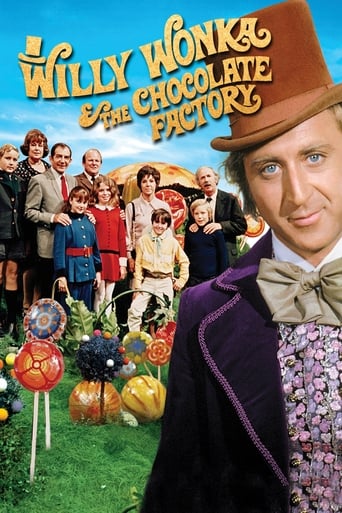
Cover of Willy Wonka & the Chocolate Factory

film

Willy Wonka & the Chocolate Factory

1971

When eccentric candy man Willy Wonka promises a lifetime supply of sweets and a tour of his chocolate factory to five lucky kids, penniless Charlie Bucket seeks the golden ticket that will make him a winner.

Ages 7+Source checked

Why this age? Generally family-friendly, but some children experience unsettling fantasy peril: being sucked into pipes, transformed, dropped down a chute, or shrunk. The suspense and Wonka's ominous behavior may trouble younger viewers. This is guidance, not a safety guarantee; reading level and family context may differ.

Quick view

At a glance

Recommended age7+

Strongest cautions

  • Frightening scenes3/5
  • Products & advertising2/5
  • Violence2/5

Strongest positives

  • Creativity & curiosity5/5
  • Positive messages4/5
  • Courage & resilience3/5

What’s in it?

Products & advertising2/5
Why this rating?

Chocolate, candy bars, and a lifetime supply of sweets drive the contest and plot, though the film is not primarily a realistic purchasing message.
Strong language1/5
Why this rating?

Occasional mild insults or name-calling by spoiled children.

Frightening scenes3/5
Why this rating?

The factory contains ominous rules, threatening machinery, isolation, dangerous experiments, and suspense about what happens to the children.

Alcohol or drugs1/5
Why this rating?

Wonka drinks a potion; children consume many sweets.

Violence2/5
Why this rating?

Comic fantasy peril repeatedly removes children from the tour: a pipe, chute, transformation, and shrinking device. There is no realistic fighting or sustained injury.

What’s good in it?

Courage & resilience3/5
Why this rating?

Charlie faces poverty, uncertainty, manipulation, and frightening factory events while ultimately making an honest, principled choice.

Creativity & curiosity5/5
Why this rating?

The candy factory, fantastical inventions, songs, unusual rooms, and inventive problem situations strongly stimulate imagination.

Diverse representation1/5
Why this rating?

Cast represents a diverse group of international children, though some fall into tropes.

Educational value1/5
Why this rating?

Incidental lessons on character building and social interaction.

Kindness & empathy3/5
Why this rating?

Charlie cares for his impoverished family, and family loyalty and generosity are important, though the contest also produces selfish behavior.

Positive messages4/5
Why this rating?

The story strongly emphasizes honesty, obedience, humility, self-control, and character; Charlie is rewarded for returning the Gobstopper.

Good role models3/5
Why this rating?

Charlie is compassionate and honest, while Grandpa Joe is supportive. Some adults and children model greed, disobedience, or poor judgment.

Family discussion

Talk about it

Conversation starters based on this title’s published content notes.

  1. What was the most imaginative idea in the story, and what would you add to it?
  2. Which moment felt most tense or frightening? What helped the characters handle fear?
  3. Which choice in Willy Wonka & the Chocolate Factory would you have made differently, and why?
  4. Who changed the most in Willy Wonka & the Chocolate Factory, and what caused that change?
Discuss this title with other parents

Community reactions

What families noticed

Add your perspective

Sign in from the homepage to rate this title.

Where to watch or buy

As an Amazon Associate, Dickens & Rumi may earn from qualifying purchases, at no extra cost to you.

These content notes are a starting point, not a guarantee. Review the evidence and use your own judgment before choosing a title.

Something wrong with this guide? Report age, caution, series, cover, or title issues.