Dickens & Rumi
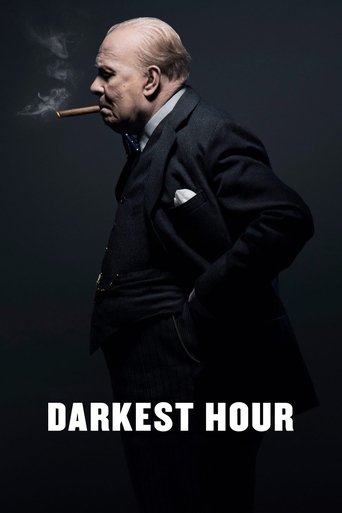
Cover of Darkest Hour

film

Darkest Hour

Age rating, content warnings & parent guide

2017

Is Darkest Hour appropriate for your child? See the reviewed age guidance, content cautions, positive themes, and supporting evidence below.

In May 1940, the fate of World War II hangs on Winston Churchill, who must decide whether to negotiate with Adolf Hitler or fight on knowing that it could mean the end of the British Empire.

Source checked

Where to watch or buy

As an Amazon Associate, Dickens & Rumi may earn from qualifying purchases, at no extra cost to you.

10-second decision

Is this likely to fit your family?

Age guidanceNot listed
Strongest cautionsAlcohol or drugs 3/5 · Death of a character 2/5 · Frightening scenes 2/5
Strongest positivesCourage & resilience 5/5 · Educational value 4/5
Recommendation4/5

Courage & resilience; strongest caution: alcohol or drugs.

This is the quick scan. Open the evidence and methodology below for the basis behind each rating.

Quick context

What parents should know

Courage & resilience; strongest caution: alcohol or drugs.

Readiness snapshotMain watch-out: Alcohol or drugs 3/5
Recommendation 4/5

Editorial rating

How this review was built

Dickens & Rumi editorial
Source checkedPublication method
15Scored categories
15Evidence notes
0Explicit 0/5 checks
Oct 23, 2026Last updated

Dickens & Rumi describes what is present; families decide what matters to them. Community reactions are kept separate from official content ratings.

Review depth15 scored categories15 evidence notes

Quick view

At a glance

Recommended ageNot listed

Strongest cautions

  • Alcohol or drugs3/5
  • Death of a character2/5
  • Frightening scenes2/5

Strongest positives

  • Courage & resilience5/5
  • Educational value4/5
  • Positive messages4/5

Keep going

What should you do next?

One review should lead naturally to the next useful choice.

What’s in it?

Death of a character2/5
Why this rating?

References to soldiers trapped and dying; death is discussed in political and military contexts.

Graphic injury1/5
Why this rating?

Minimal; focuses on the psychological and political tension rather than physical trauma.

Strong language2/5
Why this rating?

Contains occasional mild profanity and heated political arguments.

Religious themes1/5
Why this rating?

Minor references to providence or traditional British values in a historical context.

Romance1/5
Why this rating?

Includes a stable, supportive marriage between Winston and Clementine Churchill.

Frightening scenes2/5
Why this rating?

The threat of Nazi invasion, military defeat, and possible national surrender creates sustained tension, though it is not a horror film.

Alcohol or drugs3/5
Why this rating?

Churchill is depicted in the historical setting as a frequent cigar smoker and drinker; these habits are adult-associated rather than youth-focused.

Violence2/5
Why this rating?

Depicts the stress of war and military defense; some implied battlefield action and explosions, but not graphic.

What’s good in it?

Courage & resilience5/5
Why this rating?

Courage is central: Churchill and others confront invasion, political opposition, possible defeat, and pressure to negotiate surrender.

Creativity & curiosity2/5
Why this rating?

Showcases inventive leadership and diplomatic maneuvering during crises.

Diverse representation1/5
Why this rating?

Reflects the historical context of 1940s Britain; limited cultural diversity in the government setting.

Educational value4/5
Why this rating?

Provides substantial context about Churchill, the 1940 government crisis, Dunkirk, British politics, and wartime decision-making, though it is dramatized.

Kindness & empathy2/5
Why this rating?

Characters show empathy, particularly his wife and supportive staff members.

Positive messages4/5
Why this rating?

Strongly emphasizes perseverance, resisting surrender, democratic accountability, leadership under pressure, and weighing military choices against human costs.

Good role models3/5
Why this rating?

Churchill shows courage and leadership but is also brusque, impulsive, and willing to mislead, allowing a nuanced rather than idealized portrayal.

Family discussion

Talk about it

Conversation starters based on this title’s published content notes.

  1. What did courage look like in this story? Was being brave always the same as being fearless?
  2. How were alcohol or drugs portrayed, and what consequences did the story show?
  3. Which choice in Darkest Hour would you have made differently, and why?
  4. Who changed the most in Darkest Hour, and what caused that change?
Discuss this title with other parents

Community perspective — separate from editorial ratings

What families noticed

Community signal

Community ratings and written reactions are a separate layer. They do not automatically change Dickens & Rumi’s official age guidance or content scores.

Add your perspective

Sign in from the homepage to rate this title.

These content notes are a starting point, not a guarantee. Review the evidence and use your own judgment before choosing a title.

Something wrong with this guide? Report age, caution, series, cover, or title issues.