Dickens & Rumi
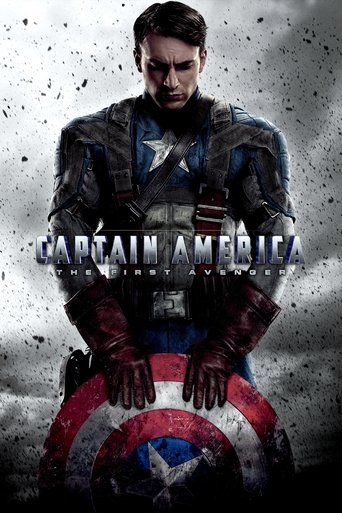
Cover of Captain America: The First Avenger

film

Captain America: The First Avenger

2011

During World War II, Steve Rogers is a sickly man from Brooklyn who's transformed into super-soldier Captain America to aid in the war effort. Rogers must stop the Red Skull – Adolf Hitler's ruthless head of weaponry, and the leader of an organization that intends to use a mysterious device of untold powers for world domination.

Ages 13+Source checked

Why this age? PG-13 wartime superhero violence includes shootings, explosions, combat, frightening imagery, deaths, sacrifice, and grief. Romance is mild, but the action and emotional stakes suit teens more than younger children. This is guidance, not a safety guarantee; reading level and family context may differ.

Quick view

At a glance

Recommended age13+

Strongest cautions

  • Violence4/5
  • Death of a character3/5
  • Frightening scenes3/5

Strongest positives

  • Courage & resilience5/5
  • Good role models4/5
  • Positive messages4/5

What’s in it?

Products & advertising3/5
Why this rating?

The film is a prominent Marvel/MCU franchise entry and includes recognizable Captain America branding, though its story is not primarily an advertisement.
Death of a character3/5
Why this rating?

Important deaths include Erskine and Kruger, while Barnes is presumed dead and Rogers is presumed dead but survives. Wartime loss is recurring, but death is not graphic or the sole focus.

Graphic injury2/5
Why this rating?

Minimal gore; primarily focuses on impact and action rather than realistic blood or injuries.

Strong language2/5
Why this rating?

Contains very mild language, typical of a PG-13 film.

Religious themes1/5
Why this rating?

No significant religious focus.

Romance2/5
Why this rating?

Steve and Peggy develop a restrained wartime romance with affection, longing, and a goodbye; it is meaningful but secondary to the adventure.

Frightening scenes3/5
Why this rating?

Threats of mass destruction, wartime peril, a skull-faced villain, dangerous experiments, crashes, and characters in life-threatening situations may frighten younger viewers.

Sexual content & nudity1/5
Why this rating?

Includes brief, non-explicit flirting and a quick, chaste kiss.

Alcohol or drugs1/5
Why this rating?

Minimal usage, consistent with the 1940s setting (e.g., social drinking).

Violence4/5
Why this rating?

Frequent wartime combat, shootings, explosions, hand-to-hand fights, raids, weapons, and superhero battles; violence is action-focused but deaths and danger are consequential.

What’s good in it?

Courage & resilience5/5
Why this rating?

Courage is central: Steve repeatedly risks himself for others, confronts tyranny, rescues prisoners, and accepts personal sacrifice to prevent catastrophe.

Creativity & curiosity3/5
Why this rating?

Sparks imaginative interest through superhero transformation, inventive technology, alternate-history wartime science, unusual villains, and problem-solving under pressure.

Diverse representation2/5
Why this rating?

Includes women with agency, Black and international soldiers, and characters from varied social backgrounds, though representation reflects a largely 1940s war setting.

Educational value1/5
Why this rating?

Provides incidental context about World War II, 1940s society, military technology, propaganda, and scientific experimentation, but education is not the main intent.

Kindness & empathy3/5
Why this rating?

Friendship, rescuing prisoners, protecting civilians, mentoring, loyalty, and empathy are recurring values, though balanced by the harshness of war.

Positive messages4/5
Why this rating?

Strongly supports courage, integrity, service, resisting tyranny, rejecting cruelty, and valuing character over physical strength or status.

Good role models4/5
Why this rating?

Steve is compassionate, self-sacrificing, persistent, and principled; Peggy, Erskine, and the Commandos also show loyalty and responsibility, despite wartime flaws.

Family discussion

Talk about it

Conversation starters based on this title’s published content notes.

  1. What did courage look like in this story? Was being brave always the same as being fearless?
  2. How did the story handle conflict or violence? Did the characters have other choices?
  3. Which choice in Captain America: The First Avenger would you have made differently, and why?
  4. Who changed the most in Captain America: The First Avenger, and what caused that change?
Discuss this title with other parents

Community reactions

What families noticed

Add your perspective

Sign in from the homepage to rate this title.

Where to watch or buy

As an Amazon Associate, Dickens & Rumi may earn from qualifying purchases, at no extra cost to you.

These content notes are a starting point, not a guarantee. Review the evidence and use your own judgment before choosing a title.

Report an incorrect rating