Dickens & Rumi
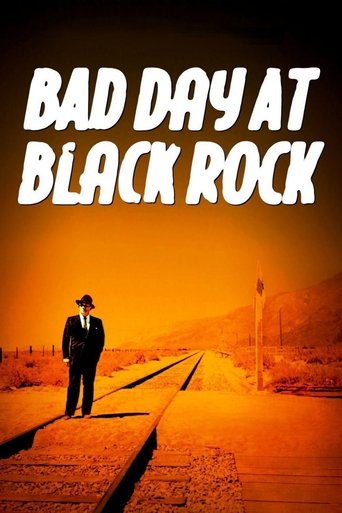
Cover of Bad Day at Black Rock

film

Bad Day at Black Rock

1955

One-armed war veteran John J. Macreedy steps off a train at the sleepy little town of Black Rock. Once there, he begins to unravel a web of lies, secrecy, and murder.

Ages 14+Source checked

Why this age? The film deals with mature themes such as murder, xenophobia, and racism, and includes sequences of suspenseful violence, including a character being burned to death by a firebomb. This is guidance, not a safety guarantee; reading level and family context may differ.

Quick view

At a glance

Recommended age14+

Strongest cautions

  • Death of a character4/5
  • Frightening scenes4/5
  • Violence4/5

Strongest positives

  • Courage & resilience5/5
  • Good role models4/5
  • Positive messages4/5

What’s in it?

Death of a character4/5
Why this rating?

Komoko is murdered in a racist attack, Liz is shot and killed, and other deaths are discussed; grief and justice are important themes.
Graphic injury2/5
Why this rating?

Brief glimpses of violence, fire-related injury, and mention of a murder site, though not overly graphic by modern standards.

Strong language2/5
Why this rating?

Includes period-appropriate derogatory language regarding racial prejudice.

Romance1/5
Why this rating?

The plot suggests no substantial romance; Liz helps Macreedy, but their relationship is primarily practical and courageous.

Frightening scenes4/5
Why this rating?

The isolated town, hostile conspiracy, pursuit, attempted murder, gunfire, and a character set on fire create sustained suspense.

Alcohol or drugs2/5
Why this rating?

The sheriff is alcoholic, and local men drink before attacking Komoko; substance use is negative rather than celebratory.

Violence4/5
Why this rating?

Repeated threats, intimidation, a fight, attempted killings, shootings, an arson attack, and a Molotov-cocktail attack drive the climax.

What’s good in it?

Courage & resilience5/5
Why this rating?

Macreedy confronts dangerous criminals despite disability and threats; others eventually risk themselves to help him and pursue justice.

Creativity & curiosity2/5
Why this rating?

Macreedy uses resourcefulness to investigate, survive attacks, and improvise a gasoline firebomb, though creativity is not the central theme.

Diverse representation3/5
Why this rating?

The film addresses Japanese-American persecution and features a one-armed veteran, but the Japanese victims are not portrayed directly.

Educational value2/5
Why this rating?

The story provides meaningful context about postwar racism, Japanese-American internment, antisemitic? No—anti-Japanese prejudice, and civic complicity.

Kindness & empathy2/5
Why this rating?

Some townspeople protect Macreedy and help expose the crime, contrasting with widespread cruelty, fear, and complicity.

Positive messages4/5
Why this rating?

The film strongly condemns racism, cowardice, corruption, mob violence, and silence, while affirming accountability and moral courage.

Good role models4/5
Why this rating?

Macreedy shows persistence and courage; Doc, Pete, and Liz eventually resist intimidation, though several adults enable or commit wrongdoing.

Family discussion

Talk about it

Conversation starters based on this title’s published content notes.

  1. What did courage look like in this story? Was being brave always the same as being fearless?
  2. How did the story approach death or loss? What helped the characters cope?
  3. Which choice in Bad Day at Black Rock would you have made differently, and why?
  4. Who changed the most in Bad Day at Black Rock, and what caused that change?
Discuss this title with other parents

Community reactions

What families noticed

Add your perspective

Sign in from the homepage to rate this title.

Where to watch or buy

As an Amazon Associate, Dickens & Rumi may earn from qualifying purchases, at no extra cost to you.

These content notes are a starting point, not a guarantee. Review the evidence and use your own judgment before choosing a title.

Report an incorrect rating