Dickens & Rumi
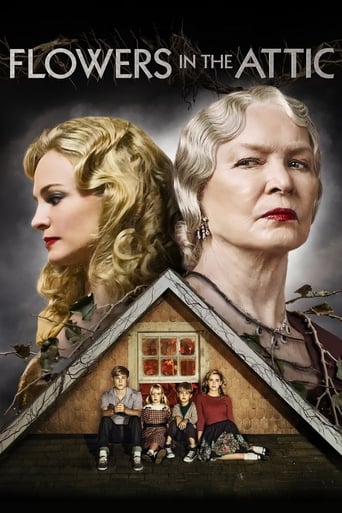
Cover of Flowers in the Attic

film

Flowers in the Attic

2014

After the sudden death of their father, four children face cruel treatment from their ruthless grandmother.

Ages 16+Source checked

Why this age? Sustained child captivity, cruelty, starvation, family betrayal, sexual-abuse and incest themes, death, and intense psychological distress make this unsuitable for children and most younger teens. This is guidance, not a safety guarantee; reading level and family context may differ.

Quick view

At a glance

Recommended age16+

Strongest cautions

  • Frightening scenes5/5
  • Sexual content & nudity5/5
  • Death of a character3/5
Strongest positives

  • Positive messages4/5
  • Courage & resilience3/5
  • Kindness & empathy2/5

What’s in it?

Death of a character3/5
Why this rating?

The story begins after the sudden death of the children's father; death and grief shape the plot.

Graphic injury1/5
Why this rating?

The children’s starvation and physical deterioration are disturbing, but the available evidence does not indicate graphic blood, wounds, or bodily injury.

Strong language2/5
Why this rating?

The material supports harsh verbal abuse and possibly occasional strong language, but not frequent or extreme profanity.

Religious themes2/5
Why this rating?

Distorted religious zeal and faith-based control contribute to the abuse, but religion is not the story’s primary subject.

Romance2/5
Why this rating?

Contains inappropriate romantic development and manipulative relationships.

Frightening scenes5/5
Why this rating?

Children are confined in an attic, isolated, threatened, and endangered by cruel relatives, creating sustained psychological terror and a sinister atmosphere.

Sexual content & nudity5/5
Why this rating?

Incest and sexual molestation are central abuse themes. Even without confirmed graphic depiction, these are highly disturbing sexual-content elements.

Alcohol or drugs1/5
Why this rating?

Any substance use appears brief and incidental rather than central, glamorized, or aimed at children.

Violence3/5
Why this rating?

Includes scenes of physical child abuse and neglect.

What’s good in it?

Courage & resilience3/5
Why this rating?

The children endure captivity and severe hardship, relying on resilience, loyalty, and efforts to protect one another.

Creativity & curiosity1/5
Why this rating?

Focuses on survival rather than creative or imaginative growth.

Kindness & empathy2/5
Why this rating?

The siblings show care and cooperation with each other amidst their hardship.

Positive messages4/5
Why this rating?

The story condemns cruelty, exploitation, family betrayal, and abusive power, though its bleak survival-focused presentation offers limited positive guidance.

Good role models1/5
Why this rating?

Children show endurance and loyalty, but many adult figures behave abusively or irresponsibly; this is not a model-family story.

Family discussion

Talk about it

Conversation starters based on this title’s published content notes.

  1. What message do you think the story most wants you to remember?
  2. Which moment felt most tense or frightening? What helped the characters handle fear?
  3. Which choice in Flowers in the Attic would you have made differently, and why?
  4. Who changed the most in Flowers in the Attic, and what caused that change?
Discuss this title with other parents

Community reactions

What families noticed

Add your perspective

Sign in from the homepage to rate this title.

Where to watch or buy

As an Amazon Associate, Dickens & Rumi may earn from qualifying purchases, at no extra cost to you.

These content notes are a starting point, not a guarantee. Review the evidence and use your own judgment before choosing a title.

Report an incorrect rating