Dickens & Rumi
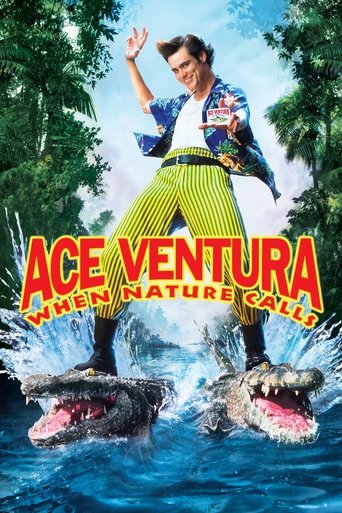
Cover of Ace Ventura: When Nature Calls

film

Ace Ventura: When Nature Calls

1995

Summoned from an ashram in Tibet, Ace finds himself on a perilous journey into the jungles of Africa to find Shikaka, the missing sacred animal of the friendly Wachati tribe. He must accomplish this before the wedding of the Wachati's Princess to the prince of the warrior Wachootoos. If Ace fails, the result will be a vicious tribal war.

Ages 13+Source checked

Why this age? PG-13 comic peril includes shootings with darts, kidnapping, a waterfall ordeal, animal attacks, implied sexual activity, crude humor, and culturally dated tribal stereotypes. The story is broadly comic but its intensity and maturity favor teens. This is guidance, not a safety guarantee; reading level and family context may differ.

Quick view

At a glance

Recommended age13+

Strongest cautions

  • Frightening scenes3/5
  • Sexual content & nudity3/5
  • Violence3/5

Strongest positives

  • Courage & resilience3/5
  • Creativity & curiosity3/5
  • Kindness & empathy2/5

What’s in it?

Products & advertising1/5
Why this rating?

The film is part of a comedy sequel franchise and includes a Rover and other vehicles, but the supplied material shows no meaningful product placement or pressure to buy merchandise.
Death of a character2/5
Why this rating?

Ace is depressed after failing to save a raccoon from falling to its death; later dangers are survived and deaths are not central.

Graphic injury1/5
Why this rating?

Some minor injuries from physical comedy, but not graphic or detailed.

Strong language2/5
Why this rating?

Includes mild profanity and frequent insults consistent with the crude comedy style.

Religious themes2/5
Why this rating?

Ace retreats to a Tibetan monastery, interacts with an Abbott, and uses spiritual projection; religious ideas are prominent in parts but not the main message.

Romance2/5
Why this rating?

A princess develops a crush on Ace, attempts to seduce him, and later marries the rival prince; romance supports the plot but is not central.

Frightening scenes3/5
Why this rating?

Threats include a waterfall, kidnapping, darts, animal attacks, a threatened tribal war, and dangerous confrontations, though comedy reduces sustained fear.

Sexual content & nudity3/5
Why this rating?

Contains significant sexual innuendo, off-color jokes, and a plot point about a character losing their virginity.

Alcohol or drugs1/5
Why this rating?

Not a focus of the film.

Violence3/5
Why this rating?

Repeated slapstick peril includes dart shootings, tribal combat challenges, an attempted war, attacks by animals, arrests, pursuit, and destruction of a vehicle.

What’s good in it?

Courage & resilience3/5
Why this rating?

Ace repeatedly faces fear of bats, tribal challenges, poachers, a waterfall, arrest, and armed pursuit to recover Shikaka and stop a war.

Creativity & curiosity3/5
Why this rating?

The film uses imaginative animal-centered mystery, absurd physical comedy, spiritual projection, inventive escapes, and unusual problem-solving.

Diverse representation1/5
Why this rating?

Features international settings, but relies on stereotypical portrayals of African tribes.

Kindness & empathy2/5
Why this rating?

Ace befriends the Wachati, protects the sacred animal, and helps prevent war; compassion is mixed with disruptive and self-centered comic behavior.

Positive messages2/5
Why this rating?

The story favors protecting animals, exposing corruption, preventing war, and resolving conflict through cooperation, though Ace's behavior is often irresponsible.

Good role models1/5
Why this rating?

Ace is resourceful and persistent in protecting the bat and stopping war, but his reckless antics, crude behavior, and deception limit his suitability as a model.

Family discussion

Talk about it

Conversation starters based on this title’s published content notes.

  1. What did courage look like in this story? Was being brave always the same as being fearless?
  2. Which moment felt most tense or frightening? What helped the characters handle fear?
  3. Which choice in Ace Ventura: When Nature Calls would you have made differently, and why?
  4. Who changed the most in Ace Ventura: When Nature Calls, and what caused that change?
Discuss this title with other parents

Community reactions

What families noticed

Add your perspective

Sign in from the homepage to rate this title.

Where to watch or buy

As an Amazon Associate, Dickens & Rumi may earn from qualifying purchases, at no extra cost to you.

These content notes are a starting point, not a guarantee. Review the evidence and use your own judgment before choosing a title.

Report an incorrect rating