Dickens & Rumi
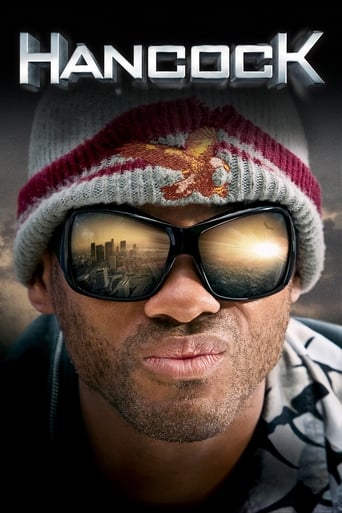
Cover of Hancock

film

Hancock

2008

Hancock is a down-and-out superhero who's forced to employ a PR expert to help repair his image when the public grows weary of all the damage he's inflicted during his lifesaving heroics. The agent's idea of imprisoning the antihero to make the world miss him proves successful, but will Hancock stick to his new sense of purpose or slip back into old habits?

Ages 13+Source checked

Why this age? PG-13 action violence includes shootings, deaths, severed hands, injuries, destruction, and dangerous behavior. Alcoholism, sexualized romance, coarse behavior, and emotionally intense themes also require early-teen maturity. This is guidance, not a safety guarantee; reading level and family context may differ.

Quick view

At a glance

Recommended age13+

Strongest cautions

  • Alcohol or drugs4/5
  • Violence4/5
  • Death of a character3/5

Strongest positives

  • Courage & resilience4/5
  • Kindness & empathy3/5
  • Positive messages3/5

What’s in it?

Products & advertising2/5
Why this rating?

Advertising and public relations are plot elements, including the All Heart brand and a conspicuous marketing logo on the Moon.

Death of a character3/5
Why this rating?

Criminals are killed during violent confrontations, and the story discusses mortality, childbirth death, and characters eventually dying.

Graphic injury3/5
Why this rating?

Blood and injuries are present, including characters being shot and hands being severed, but graphic detail appears limited in the source description.

Strong language3/5
Why this rating?

Frequent use of moderate profanity and insults throughout the film.

Religious themes1/5
Why this rating?

The film references ancient cultures viewing superpowered beings as gods or angels, but religious practice is not central.

Romance3/5
Why this rating?

A major plot thread involves Hancock and Mary’s ancient soulmate relationship, attraction, kissing, separation, and emotionally complicated history.

Frightening scenes3/5
Why this rating?

Hostage situations, gun threats, hospital attacks, dangerous superhuman fights, and large-scale destruction may be frightening.

Sexual content & nudity1/5
Why this rating?

Contains some suggestive dialogue and implied sexual tension.

Alcohol or drugs4/5
Why this rating?

Alcoholism is a central character trait; the protagonist is frequently seen drinking and struggling with addiction.

Violence4/5
Why this rating?

Frequent superhero and criminal violence includes shootings, fights, explosions, destruction, hostage danger, and characters killing or seriously injuring attackers.

What’s good in it?

Courage & resilience4/5
Why this rating?

Hancock repeatedly faces armed criminals and personal vulnerability, ultimately risking himself to protect others and control his destructive impulses.

Creativity & curiosity2/5
Why this rating?

The unusual antihero premise, superhuman mythology, soulmate powers, and imaginative use of flight and invulnerability encourage genre imagination.

Diverse representation2/5
Why this rating?

Features a multi-ethnic cast, though characters follow some standard superhero tropes.

Educational value1/5
Why this rating?

Explores the concept of PR and image management in a pop-culture context.

Kindness & empathy3/5
Why this rating?

Ray supports Hancock’s recovery, his family offers care, and Hancock increasingly protects people and restrains himself, despite substantial early selfishness.

Positive messages3/5
Why this rating?

The story emphasizes accountability, rehabilitation, self-control, repairing harm, responsible heroism, and changing destructive habits.

Good role models2/5
Why this rating?

Hancock begins as reckless, rude, and intoxicated, but gradually accepts responsibility and shows restraint; other adults model support and intervention.

Family discussion

Talk about it

Conversation starters based on this title’s published content notes.

  1. What did courage look like in this story? Was being brave always the same as being fearless?
  2. How were alcohol or drugs portrayed, and what consequences did the story show?
  3. Which choice in Hancock would you have made differently, and why?
  4. Who changed the most in Hancock, and what caused that change?
Discuss this title with other parents

Community reactions

What families noticed

Add your perspective

Sign in from the homepage to rate this title.

Where to watch or buy

As an Amazon Associate, Dickens & Rumi may earn from qualifying purchases, at no extra cost to you.

These content notes are a starting point, not a guarantee. Review the evidence and use your own judgment before choosing a title.

Report an incorrect rating