Dickens & Rumi
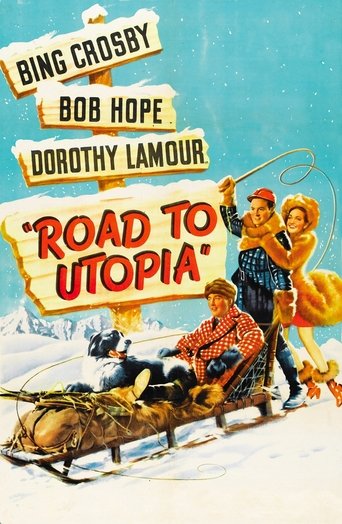
Cover of Road to Utopia

film

Road to Utopia

1946

While on a ship to Skagway, Alaska, Duke and Chester find a map to a secret gold mine, which had been 'stolen' by thugs. In Alaska to recover her father's map, Sal Van Hoyden falls in with Ace Larson, who secretly wants to steal the gold mine for himself. Duke, Chester, the thugs, Ace and his henchman chase each other all over the countryside—for the map.

Ages 10+Source checked

Why this age? The film features classic slapstick violence, mild suggestive dialogue, and mild peril, typical of 1940s family-friendly comedies. It is generally suitable for older children. This is guidance, not a safety guarantee; reading level and family context may differ.

Quick view

At a glance

Recommended age10+

Strongest cautions

  • Romance3/5
  • Violence3/5
  • Death of a character2/5

Strongest positives

  • Creativity & curiosity3/5
  • Courage & resilience2/5
  • Good role models2/5

What’s in it?

Death of a character2/5
Why this rating?

McGurk and Sperry are apparently blown up by dynamite, while hanging and other deaths are threatened; the treatment is comic and not grief-focused.
Strong language1/5
Why this rating?

Language appears limited to mild, era-appropriate insults or name-calling; no strong profanity or slurs are indicated.

Romance3/5
Why this rating?

Romantic attraction and rivalry are important to the plot, including love declarations, jealousy, flirtation, and passionate kissing.

Frightening scenes2/5
Why this rating?

Some mild tension regarding being chased or threatened by thugs, but handled with comedy.

Sexual content & nudity1/5
Why this rating?

Includes light innuendo and suggestive banter typical of the era's romantic comedies.

Alcohol or drugs1/5
Why this rating?

Saloon settings may include incidental alcohol use by adults, but drinking is not central, glamorized, or shown as a major concern.

Violence3/5
Why this rating?

Repeated slapstick confrontations, escapes, posse chases, a threatened hanging, and dynamite are presented as comic adventure rather than realistic brutality.

What’s good in it?

Courage & resilience2/5
Why this rating?

Characters repeatedly face criminals, mobs, explosions, wilderness hazards, and a widening ice gap while attempting rescues and escapes.

Creativity & curiosity3/5
Why this rating?

Inventive disguises, vaudeville routines, map schemes, dog-sled escapes, improvised rescues, and comic problem-solving are central to the adventure.

Diverse representation1/5
Why this rating?

Reflects the limited casting standards of the 1940s.

Kindness & empathy1/5
Why this rating?

Characters show loyalty and rescue one another, especially when saving Sal, although manipulation, jealousy, and self-interest are frequent.

Positive messages2/5
Why this rating?

The film favors loyalty, love, ingenuity, and helping others, though deception, cheating, greed, and criminal schemes drive much of the comedy.

Good role models2/5
Why this rating?

The leads are resourceful and ultimately help Sal, but they also con people, cheat, impersonate criminals, and behave irresponsibly for comic effect.

Family discussion

Talk about it

Conversation starters based on this title’s published content notes.

  1. What was the most imaginative idea in the story, and what would you add to it?
  2. How did relationships or romance affect the characters’ choices?
  3. Which choice in Road to Utopia would you have made differently, and why?
  4. Who changed the most in Road to Utopia, and what caused that change?
Discuss this title with other parents

Community reactions

What families noticed

Add your perspective

Sign in from the homepage to rate this title.

Where to watch or buy

As an Amazon Associate, Dickens & Rumi may earn from qualifying purchases, at no extra cost to you.

These content notes are a starting point, not a guarantee. Review the evidence and use your own judgment before choosing a title.

Report an incorrect rating