Dickens & Rumi
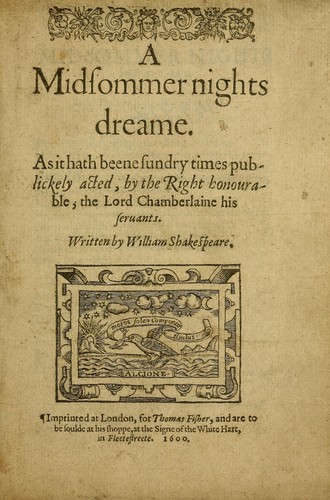
Cover of A Midsummer Night's Dream

book

A Midsummer Night's Dream

Age rating, content warnings & parent guide

William Shakespeare · 1600

Is A Midsummer Night's Dream appropriate for your child? See the reviewed age guidance, content cautions, positive themes, and supporting evidence below.

Explore the age guidance, content cautions, positive qualities, and supporting notes for A Midsummer Night's Dream by William Shakespeare. This book is recommended for ages 12+; content notes include Romance, Frightening scenes, Sexual content & nudity; positive qualities include Creativity & curiosity, Educational value.

Ages 12+Source checked

Why this age? The content is mostly mild, but archaic language, romantic/sexual allusions, coercive enchantment and the play's complex structure generally suit early adolescents with guidance. This is guidance, not a safety guarantee; reading level and family context may differ.

Where to get it

As an Amazon Associate and Bookshop.org affiliate, Dickens & Rumi may earn a small commission from qualifying purchases, at no extra cost to you.

10-second decision

Is this likely to fit your family?

Age guidanceAges 12+
Strongest cautionsRomance 4/5 · Frightening scenes 2/5 · Sexual content & nudity 2/5
Strongest positivesCreativity & curiosity 5/5 · Educational value 4/5
Recommendation3.8/5

Creativity & curiosity; strongest caution: romance.

This is the quick scan. Open the evidence and methodology below for the basis behind each rating.

Quick context

What parents should know

The content is mostly mild, but archaic language, romantic/sexual allusions, coercive enchantment and the play's complex structure generally suit early adolescents with guidance. This is guidance, not a safety guarantee; reading level and family context may differ. Creativity & curiosity; strongest caution: romance.

Readiness snapshotAge guidance: 12+Main watch-out: Romance 4/5
Recommendation 3.8/5

Editorial rating

How this review was built

Dickens & Rumi editorial
Source checkedPublication method
15Scored categories
15Evidence notes
0Explicit 0/5 checks
Oct 22, 2026Last updated

Dickens & Rumi describes what is present; families decide what matters to them. Community reactions are kept separate from official content ratings.

Review depth15 scored categories15 evidence notes
Show Wikipedia summary

Open to load a short Wikipedia summary.

Quick view

At a glance

Recommended age12+

Strongest cautions

  • Romance4/5
  • Frightening scenes2/5
  • Sexual content & nudity2/5

Strongest positives

  • Creativity & curiosity5/5
  • Educational value4/5
  • Positive messages4/5

Keep going

What should you do next?

One review should lead naturally to the next useful choice.

Similar, with lighter cautions

Want something gentler?

These reviewed titles have overlapping age guidance and a lower total caution score than A Midsummer Night's Dream. Open each review for the details.

What’s in it?

Death of a character1/5
Why this rating?

The mechanicals perform a comic play featuring deaths, but no central character dies and the treatment is deliberately theatrical.
Strong language2/5
Why this rating?

The language is poetic and includes insults, quarrels and occasional bawdy wordplay, but not pervasive modern profanity.

Religious themes1/5
Why this rating?

Focuses on mythology and folklore rather than religious practice.

Romance4/5
Why this rating?

Romantic attraction, courtship, jealousy and changing affections drive the plot across several couples and culminate in marriages.

Frightening scenes2/5
Why this rating?

The enchanted forest, fairies and transformations may feel eerie, but danger is generally playful and resolved comically.

Sexual content & nudity2/5
Why this rating?

Contains some bawdy innuendo typical of Shakespeare's humor.

Alcohol or drugs1/5
Why this rating?

A magical flower potion causes infatuation; it is fantasy enchantment rather than real-world substance use.

Violence2/5
Why this rating?

Threats, pursuit, quarrels and comic conflict occur, including Oberon's manipulation and Puck's pranks, but violence is not graphically depicted.

What’s good in it?

Courage & resilience2/5
Why this rating?

The young lovers defy expectations and face uncertainty, though their actions are often impulsive rather than consistently principled.

Creativity & curiosity5/5
Why this rating?

Imagination, theater, poetry, transformation and inventive storytelling are fundamental to the work.

Diverse representation1/5
Why this rating?

The play includes class variety and supernatural beings, but offers little diversity in modern identities, cultures or lived experiences.

Educational value4/5
Why this rating?

It offers substantial literary, dramatic and cultural learning, including poetic language, mythology, theater and adaptation.

Kindness & empathy2/5
Why this rating?

Friendship and reconciliation matter, but characters also deceive, bully and manipulate one another for much of the play.

Positive messages4/5
Why this rating?

It explores the instability of desire, the value of imagination and performance, and the need to repair disorder and relationships.

Good role models2/5
Why this rating?

Characters show loyalty and reconciliation, but many also act selfishly, deceive others or misuse power, especially through enchantment.

Family discussion

Talk about it

Conversation starters based on this title’s published content notes.

  1. What was the most imaginative idea in the story, and what would you add to it?
  2. How did relationships or romance affect the characters’ choices?
  3. Which choice in A Midsummer Night's Dream would you have made differently, and why?
  4. Who changed the most in A Midsummer Night's Dream, and what caused that change?
Discuss this title with other parents

Community perspective — separate from editorial ratings

What families noticed

Community signal

Community ratings and written reactions are a separate layer. They do not automatically change Dickens & Rumi’s official age guidance or content scores.

Add your perspective

Sign in from the homepage to rate this title.

If you liked this

Try something nearby

Related by age fit, format, and catalogue context.

These content notes are a starting point, not a guarantee. Review the evidence and use your own judgment before choosing a title.

Something wrong with this guide? Report age, caution, series, cover, or title issues.