Dickens & Rumi
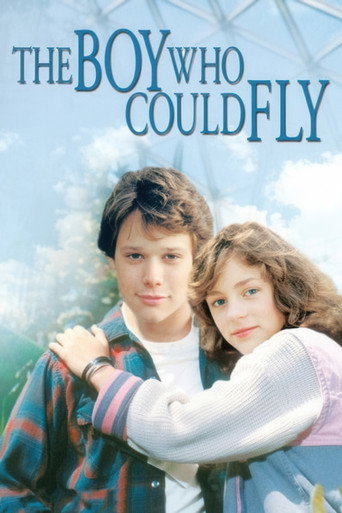
Cover of The Boy Who Could Fly

film

The Boy Who Could Fly

1986

Milly and Louis, and their recently-widowed mom, Charlene, move to a new neighborhood. Once there, they all deal with a variety of personal problems, but Milly finds a friend in Eric, her autistic next door neighbor. Eric has a fascination with flight, and as the story progresses, he exerts an enthralling force of change on all those around him.

Ages 11+Source checked

Why this age? Best suited to older children because of suicide, parental death, grief, alcoholism, institutional restraint, bullying, a dangerous jump, and emotionally complex themes; romance is gentle and nonsexual. This is guidance, not a safety guarantee; reading level and family context may differ.

Quick view

At a glance

Recommended age11+

Strongest cautions

  • Death of a character4/5
  • Alcohol or drugs3/5
  • Frightening scenes3/5

Strongest positives

  • Courage & resilience4/5
  • Creativity & curiosity4/5
  • Kindness & empathy4/5

What’s in it?

Death of a character4/5
Why this rating?

The film centers on the impact of a father's suicide and the trauma of a boy losing his parents in a plane crash.

Graphic injury1/5
Why this rating?

A dog is hit by a car, which is mentioned as a distressing event; minimal graphic detail.

Strong language1/5
Why this rating?

The supplied material mentions bullying and harassment but includes no profanity or strong terms. Any language appears limited to mild name-calling or conflict.

Romance2/5
Why this rating?

Milly develops an attraction to Eric; they share a kiss and express love, but romance remains gentle and secondary to grief and friendship.

Frightening scenes3/5
Why this rating?

Storms, confinement, a fall, a car accident involving the dog, uncertain supernatural events, and a perilous rooftop escape may be upsetting.

Alcohol or drugs3/5
Why this rating?

Eric's uncle is alcoholic, is found drunk repeatedly, and his drinking contributes to neglect; he later quits drinking.

Violence2/5
Why this rating?

Bullying, restraint in a straitjacket, a dangerous fall and chase, and a jump from a roof occur; violence is not graphically depicted.

What’s good in it?

Courage & resilience4/5
Why this rating?

Characters demonstrate courage in facing their personal traumas and standing up for each other.

Creativity & curiosity4/5
Why this rating?

The film uses a magical-realist premise to explore the power of imagination and hope.

Diverse representation2/5
Why this rating?

Features an autistic lead character, showing his unique perspective and struggles with societal reactions.

Educational value1/5
Why this rating?

Explores the importance of empathy and supporting those with different abilities.

Kindness & empathy4/5
Why this rating?

Kindness and empathy are the driving forces of the narrative and the characters' growth.

Positive messages4/5
Why this rating?

Strong positive messages about processing grief, empathy, and the power of believing in oneself.

Good role models3/5
Why this rating?

Milly shows loyalty and compassion and helps Eric, while adults are imperfect; some choices are risky, including helping him escape and jumping from a roof.

Family discussion

Talk about it

Conversation starters based on this title’s published content notes.

  1. What did courage look like in this story? Was being brave always the same as being fearless?
  2. How did the story approach death or loss? What helped the characters cope?
  3. Which choice in The Boy Who Could Fly would you have made differently, and why?
  4. Who changed the most in The Boy Who Could Fly, and what caused that change?
Discuss this title with other parents

Community reactions

What families noticed

Add your perspective

Sign in from the homepage to rate this title.

Where to watch or buy

As an Amazon Associate, Dickens & Rumi may earn from qualifying purchases, at no extra cost to you.

These content notes are a starting point, not a guarantee. Review the evidence and use your own judgment before choosing a title.

Report an incorrect rating