Dickens & Rumi
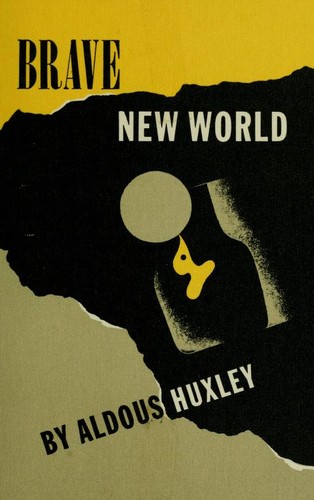
Cover of Brave New World

book

Brave New World

Aldous Huxley · 1932

Explore the age guidance, content cautions, positive qualities, and supporting notes for Brave New World by Aldous Huxley. This book is recommended for ages 16+; content notes include Alcohol or drugs, Death of a character, Products & advertising; positive qualities include Creativity & curiosity, Educational value.

Ages 16+Source checked

Why this age? The novel includes disturbing reproductive engineering, caste oppression, sexual pressure, drug dependence, death, public violence, religiously inflected ritual, self-harm, and a tragic ending, alongside philosophically demanding themes. This is guidance, not a safety guarantee; reading level and family context may differ.

Quick view

At a glance

Recommended age16+

Strongest cautions

  • Alcohol or drugs4/5
  • Death of a character4/5
  • Products & advertising4/5

Strongest positives

  • Creativity & curiosity4/5
  • Educational value4/5
  • Positive messages4/5

What’s in it?

Products & advertising4/5
Why this rating?

Constant consumption, soma, disposable goods, and manufactured entertainment are central mechanisms of the World State and a major target of the novel’s criticism.
Death of a character4/5
Why this rating?

Death is a major thematic element, including the death of a mother and the protagonist's tragic end.

Graphic injury1/5
Why this rating?

The self-flagellation implies pain and physical trauma, though not described in gratuitous detail.

Strong language2/5
Why this rating?

Some vulgar references, insults, and socially offensive terminology appear, but strong profanity is not a dominant feature.

Religious themes3/5
Why this rating?

Religious practice and belief appear through the Reservation's rituals and references to Christianity, Native traditions, and Ford-like civic worship.

Romance3/5
Why this rating?

Attraction and attempted courtship between Lenina and John are important, but the novel primarily uses them to contrast incompatible values.

Frightening scenes3/5
Why this rating?

Unsettling dystopian conditioning, death-conditioning, social persecution, riots, and self-flagellation create sustained psychological unease, though this is not primarily a horror novel.

Sexual content & nudity4/5
Why this rating?

Promiscuity is a societal norm in the World State and frequently discussed or depicted as the standard.

Alcohol or drugs4/5
Why this rating?

The use of soma, a state-mandated hallucinogenic/tranquilizer, is central to the plot.

Violence3/5
Why this rating?

There is a violent ritual, an assault, a riot, police suppression, and conflict over social control; violence is consequential rather than generally graphic.

What’s good in it?

Courage & resilience3/5
Why this rating?

Bernard, Helmholtz, and especially John challenge conformity and official ideology, though their choices produce mixed and sometimes tragic results.

Creativity & curiosity4/5
Why this rating?

A highly imaginative and intellectually demanding foundational work of science fiction.

Diverse representation2/5
Why this rating?

The novel contrasts castes, outsiders, and Indigenous cultural settings, but its engineered hierarchy and dated, stereotyped treatment limit inclusive, well-rounded representation.

Educational value4/5
Why this rating?

It offers substantial literary, philosophical, political, and social critique, while exploring conditioning, reproduction, technology, class, and authoritarian control.

Kindness & empathy1/5
Why this rating?

Compassion exists in individual relationships, but the society is emotionally conditioned against deep attachment and routinely treats people as instruments.

Positive messages4/5
Why this rating?

The work strongly warns against the loss of individual freedom, critical thinking, and humanity in pursuit of comfort.

Good role models2/5
Why this rating?

Characters show courage and intellectual independence, but most are compromised; John is principled yet also volatile, self-destructive, and unable to adapt.

Family discussion

Talk about it

Conversation starters based on this title’s published content notes.

  1. What was the most imaginative idea in the story, and what would you add to it?
  2. How were alcohol or drugs portrayed, and what consequences did the story show?
  3. Which choice in Brave New World would you have made differently, and why?
  4. Who changed the most in Brave New World, and what caused that change?
Discuss this title with other parents

Community reactions

What families noticed

Add your perspective

Sign in from the homepage to rate this title.

Where to get it

As an Amazon Associate and Bookshop.org affiliate, Dickens & Rumi may earn a small commission from qualifying purchases, at no extra cost to you.

If you liked this

Try something nearby

Related by age fit, format, and catalogue context.

These content notes are a starting point, not a guarantee. Review the evidence and use your own judgment before choosing a title.

Report an incorrect rating