Dickens & Rumi
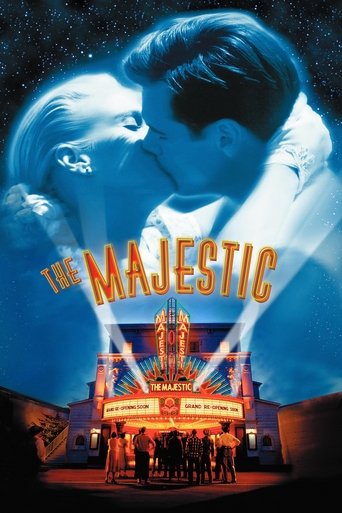
Cover of The Majestic

film

The Majestic

2001

Set in 1951, a blacklisted Hollywood writer gets into a car accident, loses his memory and settles down in a small town where he is mistaken for a long-lost son.

Ages 12+Source checked

Why this age? The film explores themes of McCarthyism, political persecution, and post-war trauma. While generally mild, it contains emotional weight, mature themes regarding political ethics, and some tense interrogations that are best suited for pre-teens and up. This is guidance, not a safety guarantee; reading level and family context may differ.

Quick context

What parents should know

The film explores themes of McCarthyism, political persecution, and post-war trauma. While generally mild, it contains emotional weight, mature themes regarding political ethics, and some tense interrogations that are best suited for pre-teens and up. This is guidance, not a safety guarantee; reading level and family context may differ. Courage & resilience; strongest caution: death of a character.

Readiness snapshotAge guidance: 12+Main watch-out: Death of a character 3/5
Recommendation 3.8/5
Review depth17 scored categories17 evidence notes

Quick view

At a glance

Recommended age12+

Strongest cautions

  • Death of a character3/5
  • Romance3/5
  • Alcohol or drugs2/5

Strongest positives

  • Courage & resilience4/5
  • Kindness & empathy4/5
  • Positive messages4/5

Keep going

What should you do next?

One review should lead naturally to the next useful choice.

What’s in it?

Products & advertising1/5
Why this rating?

Reflects era-specific branding, but does not aggressively promote consumer products.

Death of a character3/5
Why this rating?

Many young men are remembered as war dead, a missing soldier is mourned, and Harry suffers a fatal heart attack followed by a funeral.

Graphic injury1/5
Why this rating?

Minor injuries shown after a car accident; blood is minimal.

Strong language2/5
Why this rating?

Some mild profanity and period-appropriate insults used in dramatic contexts.

Religious themes1/5
Why this rating?

Some references to funerals and small-town traditional values; religion is not a central focus.

Romance3/5
Why this rating?

Romance is a major plot element, involving a former engagement, emotional conflict, marriage, and a family life ending.

Frightening scenes2/5
Why this rating?

Occasional scenes of mild tension regarding the protagonist's secret being discovered.

Sexual content & nudity1/5
Why this rating?

Very mild references to romantic history; no explicit sexual content.

Alcohol or drugs2/5
Why this rating?

Peter gets drunk and drives before the accident; the behavior is presented as a serious mistake rather than a model to follow.

Violence2/5
Why this rating?

Features a car accident and some tense, aggressive questioning during political hearings.

What’s good in it?

Courage & resilience4/5
Why this rating?

Peter chooses principled resistance to blacklisting and public intimidation, drawing on Luke's example and constitutional ideals.

Creativity & curiosity3/5
Why this rating?

Screenwriting, filmmaking, restoring and operating a cinema, and using storytelling to reconnect a community are central creative elements.

Diverse representation1/5
Why this rating?

Cast is limited to a small-town white demographic appropriate to the 1950s period setting.

Educational value3/5
Why this rating?

It introduces McCarthyism, Hollywood blacklisting, wartime remembrance, congressional hearings, and First Amendment principles through drama.

Kindness & empathy4/5
Why this rating?

Townspeople care for Peter, help restore the theater, support one another through grief, and eventually respect him for who he is.

Positive messages4/5
Why this rating?

The film strongly emphasizes free speech, resisting bullying and political coercion, honoring truth, confronting injustice, and rebuilding after grief.

Good role models3/5
Why this rating?

Peter ultimately accepts responsibility and risks his career to oppose unfair persecution; other characters show both protective compassion and ethically difficult choices.

Family discussion

Talk about it

Conversation starters based on this title’s published content notes.

  1. What did courage look like in this story? Was being brave always the same as being fearless?
  2. How did the story approach death or loss? What helped the characters cope?
  3. Which choice in The Majestic would you have made differently, and why?
  4. Who changed the most in The Majestic, and what caused that change?
Discuss this title with other parents

Community reactions

What families noticed

Add your perspective

Sign in from the homepage to rate this title.

Where to watch or buy

As an Amazon Associate, Dickens & Rumi may earn from qualifying purchases, at no extra cost to you.

These content notes are a starting point, not a guarantee. Review the evidence and use your own judgment before choosing a title.

Something wrong with this guide? Report age, caution, series, cover, or title issues.