Dickens & Rumi
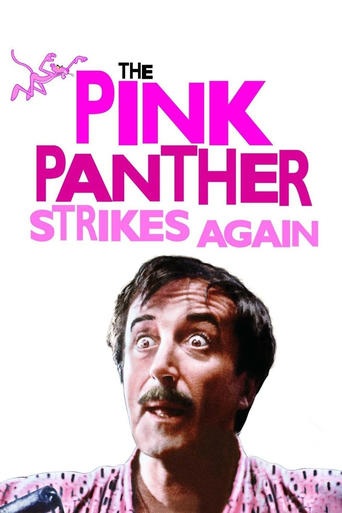
Cover of The Pink Panther Strikes Again

film

The Pink Panther Strikes Again

1976

Charles Dreyfus, who has finally cracked over inspector Clouseau's antics, escapes from a mental institution and launches an elaborate plan to get rid of Clouseau once and for all.

Ages 10+Source checked

Why this age? Broad comic violence is frequent, including bombings, killings, kidnapping and a mass-destruction threat. The tone is absurd rather than realistic, with mild sexual situations and limited language. This is guidance, not a safety guarantee; reading level and family context may differ.

Quick context

What parents should know

Broad comic violence is frequent, including bombings, killings, kidnapping and a mass-destruction threat. The tone is absurd rather than realistic, with mild sexual situations and limited language. This is guidance, not a safety guarantee; reading level and family context may differ. Creativity & curiosity; strongest caution: death of a character.

Readiness snapshotAge guidance: 10+Main watch-out: Death of a character 4/5
Recommendation 1.8/5
Review depth15 scored categories15 evidence notes

Quick view

At a glance

Recommended age10+

Strongest cautions

  • Death of a character4/5
  • Violence4/5
  • Frightening scenes3/5

Strongest positives

  • Creativity & curiosity3/5
  • Courage & resilience2/5
  • Diverse representation1/5

Keep going

What should you do next?

One review should lead naturally to the next useful choice.

What’s in it?

Death of a character4/5
Why this rating?

Several characters die, including a butler, assassins and henchmen. Dreyfus apparently dies when the castle is destroyed, but the deaths are played broadly for comic effect.
Graphic injury1/5
Why this rating?

Minimal, includes the comedic disintegration of a building and brief mentions of injury in a non-graphic way.

Strong language1/5
Why this rating?

Occasional mild profanity and comedic insults, consistent with the film's era and rating.

LGBTQIA characters1/5
Why this rating?

Features a minor character described as a cross-dressing butler, a trope common in 1970s comedies.

Romance2/5
Why this rating?

A brief attraction and tryst involving Olga and Clouseau appear near the end, but romance is secondary to the comedy.

Frightening scenes3/5
Why this rating?

Repeated danger, kidnapping, assassins, explosions and a doomsday weapon create sustained peril, softened by broad farce.

Sexual content & nudity2/5
Why this rating?

Features suggestive dialogue and implied sexual situations involving the protagonist's love interests.

Alcohol or drugs2/5
Why this rating?

Characters become intoxicated by nitrous oxide during a dental gag; there is no indication of recreational drug use.

Violence4/5
Why this rating?

Frequent slapstick attacks, assassination attempts, bombings, fights and destruction are played for comedy, though the plot includes serious threats.

What’s good in it?

Courage & resilience2/5
Why this rating?

Characters face assassins, kidnapping and catastrophic threats; Clouseau persistently investigates despite danger, albeit recklessly.

Creativity & curiosity3/5
Why this rating?

Elaborate disguises, absurd problem-solving, visual gags and inventive slapstick drive the film's distinctive comic imagination.

Diverse representation1/5
Why this rating?

The international cast of police, assassins and supporting characters offers some national and cultural variety, mostly through broad comic roles.

Kindness & empathy1/5
Why this rating?

Characters are generally self-interested, with little focus on empathetic behavior.

Positive messages1/5
Why this rating?

The comedy favors resilience and stopping dangerous schemes, though incompetence and destructive chaos are repeatedly used for laughs.

Good role models1/5
Why this rating?

Clouseau persists and ultimately prevents catastrophe, but his recklessness, incompetence and poor judgment limit his value as a role model.

Family discussion

Talk about it

Conversation starters based on this title’s published content notes.

  1. What was the most imaginative idea in the story, and what would you add to it?
  2. How did the story approach death or loss? What helped the characters cope?
  3. Which choice in The Pink Panther Strikes Again would you have made differently, and why?
  4. Who changed the most in The Pink Panther Strikes Again, and what caused that change?
Discuss this title with other parents

Community reactions

What families noticed

Add your perspective

Sign in from the homepage to rate this title.

Where to watch or buy

As an Amazon Associate, Dickens & Rumi may earn from qualifying purchases, at no extra cost to you.

These content notes are a starting point, not a guarantee. Review the evidence and use your own judgment before choosing a title.

Something wrong with this guide? Report age, caution, series, cover, or title issues.