Dickens & Rumi
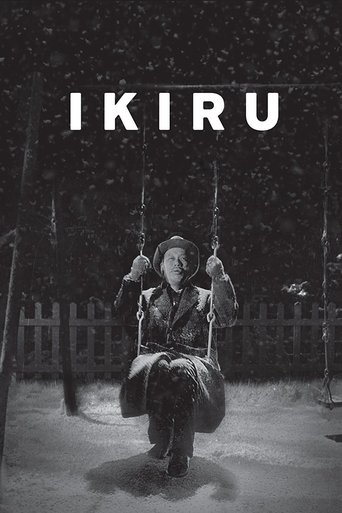
Cover of Ikiru

film

Ikiru

1956

Kanji Watanabe is a middle-aged man who has worked in the same monotonous bureaucratic position for decades. Learning he has cancer, he starts to look for the meaning of his life.

Ages 13+Source checked

Why this age? The film centers on terminal illness, death, grief, existential despair, and adult social pressures. It has little sexual content or graphic violence, but its themes and slow, contemplative style suit mature teens and adults. This is guidance, not a safety guarantee; reading level and family context may differ.

Quick view

At a glance

Recommended age13+

Strongest cautions

  • Death of a character5/5
  • Alcohol or drugs2/5
  • Romance2/5

Strongest positives

  • Positive messages5/5
  • Courage & resilience4/5
  • Good role models4/5

What’s in it?

Death of a character5/5
Why this rating?

A terminal diagnosis leads to the protagonist’s death, which drives the entire story. Mortality, loss, and grief are handled seriously rather than humorously.
Strong language1/5
Why this rating?

Very mild language consistent with a 1950s social drama.

Romance2/5
Why this rating?

There is some emotionally significant male-female companionship and discussion of attraction, but romance is not the main focus.

Frightening scenes1/5
Why this rating?

The tone is somber and melancholic, which may be unsettling for very young viewers.

Sexual content & nudity1/5
Why this rating?

No sexual content.

Alcohol or drugs2/5
Why this rating?

Adults smoke and drink in social settings; these behaviors are present but are not presented as a major theme or instructional focus.

Violence1/5
Why this rating?

No meaningful physical violence is central to the story.

What’s good in it?

Courage & resilience4/5
Why this rating?

Watanabe shows great moral courage in challenging systemic indifference.

Creativity & curiosity3/5
Why this rating?

It encourages reflective thinking and shows determined problem-solving within civic and bureaucratic constraints, rather than artistic creativity as a main theme.

Diverse representation1/5
Why this rating?

Reflects the homogeneous society of 1950s Japan.

Educational value2/5
Why this rating?

Provides insight into post-WWII Japanese bureaucracy and societal structure.

Kindness & empathy4/5
Why this rating?

Kindness and empathy are the core motivators for the protagonist's final acts.

Positive messages5/5
Why this rating?

Strong message about personal responsibility, overcoming apathy, and finding meaning through service.

Good role models4/5
Why this rating?

Watanabe transforms into an exemplary figure of selfless dedication.

Family discussion

Talk about it

Conversation starters based on this title’s published content notes.

  1. What message do you think the story most wants you to remember?
  2. How did the story approach death or loss? What helped the characters cope?
  3. Which choice in Ikiru would you have made differently, and why?
  4. Who changed the most in Ikiru, and what caused that change?
Discuss this title with other parents

Community reactions

What families noticed

Add your perspective

Sign in from the homepage to rate this title.

Where to watch or buy

As an Amazon Associate, Dickens & Rumi may earn from qualifying purchases, at no extra cost to you.

These content notes are a starting point, not a guarantee. Review the evidence and use your own judgment before choosing a title.

Report an incorrect rating