Dickens & Rumi
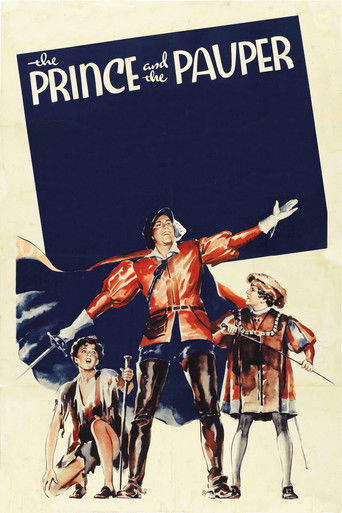
Cover of The Prince and the Pauper

film

The Prince and the Pauper

1937

Two boys – the prince Edward and the pauper Tom – are born on the same day. Years later, when young teenage Tom sneaks into the palace garden, he meets the prince. They change clothes with one another before the guards discover them and throw out the prince thinking he's the urchin. No one believes them when they try to tell the truth about which is which. Soon after, the old king dies and the prince will inherit the throne.

Ages 8+Source checked

Why this age? The story involves children in danger, social hardship, deception, imprisonment, and historical peril, with some action violence and emotional tension. Its old-fashioned style and plot may require adult context for younger viewers. This is guidance, not a safety guarantee; reading level and family context may differ.

Quick view

At a glance

Recommended age8+

Strongest cautions

  • Violence3/5
  • Death of a character2/5
  • Frightening scenes2/5

Strongest positives

  • Courage & resilience4/5
  • Kindness & empathy4/5
  • Positive messages4/5

What’s in it?

Death of a character2/5
Why this rating?

The death of King Henry VIII is a key plot point, though handled in a classic, non-graphic manner.

Graphic injury1/5
Why this rating?

No gore or blood is depicted.

Strong language1/5
Why this rating?

Features period-appropriate language; no modern profanity.

Religious themes1/5
Why this rating?

Religious customs may appear in the Tudor setting and monarchy-related ceremonies, but faith is not a major focus of the story.

Romance1/5
Why this rating?

No significant romantic content.

Frightening scenes2/5
Why this rating?

The boys face pursuit, mistaken identity, imprisonment and angry adults, but the adventure tone keeps danger moderate rather than intensely frightening.

Alcohol or drugs1/5
Why this rating?

Portrayal of period tavern settings where adults drink alcohol.

Violence3/5
Why this rating?

Includes some scuffles, threats from guards, and depictions of harsh life in 16th-century London.

What’s good in it?

Courage & resilience4/5
Why this rating?

Both boys show bravery when facing their respective adversities.

Creativity & curiosity3/5
Why this rating?

Encourages imagination through the classic premise of identity swap and social exploration.

Diverse representation1/5
Why this rating?

The central prince-and-pauper contrast offers social-class variety, while broader ethnic, cultural, disability and identity representation appears limited.

Educational value2/5
Why this rating?

It offers incidental exposure to Tudor England, monarchy, social class, succession, and historical customs rather than formal instruction.

Kindness & empathy4/5
Why this rating?

Characters display empathy as they experience each other's lives.

Positive messages4/5
Why this rating?

Emphasizes empathy, the importance of justice, and understanding the struggles of others.

Good role models3/5
Why this rating?

The protagonists grow in maturity, kindness, and moral integrity throughout the film.

Family discussion

Talk about it

Conversation starters based on this title’s published content notes.

  1. What did courage look like in this story? Was being brave always the same as being fearless?
  2. How did the story handle conflict or violence? Did the characters have other choices?
  3. Which choice in The Prince and the Pauper would you have made differently, and why?
  4. Who changed the most in The Prince and the Pauper, and what caused that change?
Discuss this title with other parents

Community reactions

What families noticed

Add your perspective

Sign in from the homepage to rate this title.

Where to watch or buy

As an Amazon Associate, Dickens & Rumi may earn from qualifying purchases, at no extra cost to you.

These content notes are a starting point, not a guarantee. Review the evidence and use your own judgment before choosing a title.

Report an incorrect rating