Dickens & Rumi
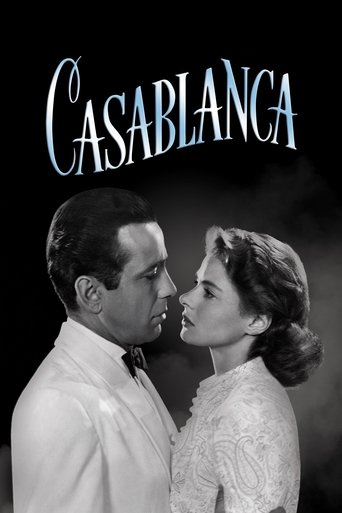
Cover of Casablanca

film

Casablanca

1943

In Casablanca, Morocco in December 1941, a cynical American expatriate meets a former lover, with unforeseen complications.

Ages 12+Source checked

Why this age? Mature wartime tensions, shootings, death, alcohol and smoking, romantic betrayal, and morally complex choices are presented without graphic detail. This is guidance, not a safety guarantee; reading level and family context may differ.

Quick view

At a glance

Recommended age12+

Strongest cautions

  • Romance4/5
  • Alcohol or drugs3/5
  • Death of a character3/5

Strongest positives

  • Courage & resilience5/5
  • Good role models4/5
  • Positive messages4/5

What’s in it?

Products & advertising1/5
Why this rating?

No modern brand promotion or commercialism.

Death of a character3/5
Why this rating?

Several characters die or face lethal danger, including wartime and criminal violence; the deaths support the moral drama.

Graphic injury1/5
Why this rating?

Deaths and shootings occur, but blood and injuries are shown with little or no graphic detail.

Strong language2/5
Why this rating?

Very mild language consistent with 1940s film standards.

Romance4/5
Why this rating?

A central, intense love triangle drives the entire plot.

Frightening scenes2/5
Why this rating?

Wartime danger, arrests, betrayal, and escape create suspense, but the film is not horror-focused and frightening imagery is limited.

Sexual content & nudity1/5
Why this rating?

Mild suggestive dialogue and romantic tension.

Alcohol or drugs3/5
Why this rating?

Characters frequently consume alcohol and smoke cigarettes, common to the noir era.

Violence3/5
Why this rating?

Threats, gun use, arrests, wartime danger, and shootings occur, including a decisive killing; violence is serious but not graphically shown.

What’s good in it?

Courage & resilience5/5
Why this rating?

Characters risk safety and personal happiness to resist oppression, help others escape, and act according to conscience.

Creativity & curiosity3/5
Why this rating?

The story highlights improvisation, clever negotiation, deception, and problem-solving under political danger.

Diverse representation2/5
Why this rating?

The international setting includes characters of varied nationalities and social positions, though representation reflects 1940s conventions and stereotypes.

Educational value2/5
Why this rating?

The film offers useful context about World War II, refugees, resistance, fascism, colonial settings, and wartime displacement, though teaching is incidental.

Kindness & empathy3/5
Why this rating?

Compassion and aid for endangered refugees appear alongside cynicism, exploitation, and betrayal.

Positive messages4/5
Why this rating?

It strongly explores sacrifice, resistance to oppression, moral responsibility, loyalty, and choosing a larger good over personal desire.

Good role models4/5
Why this rating?

Characters are morally complicated, but courage, integrity, and self-sacrifice ultimately guide important choices.

Family discussion

Talk about it

Conversation starters based on this title’s published content notes.

  1. What did courage look like in this story? Was being brave always the same as being fearless?
  2. How did relationships or romance affect the characters’ choices?
  3. Which choice in Casablanca would you have made differently, and why?
  4. Who changed the most in Casablanca, and what caused that change?
Discuss this title with other parents

Community reactions

What families noticed

Add your perspective

Sign in from the homepage to rate this title.

Where to watch or buy

As an Amazon Associate, Dickens & Rumi may earn from qualifying purchases, at no extra cost to you.

These content notes are a starting point, not a guarantee. Review the evidence and use your own judgment before choosing a title.

Report an incorrect rating