Dickens & Rumi
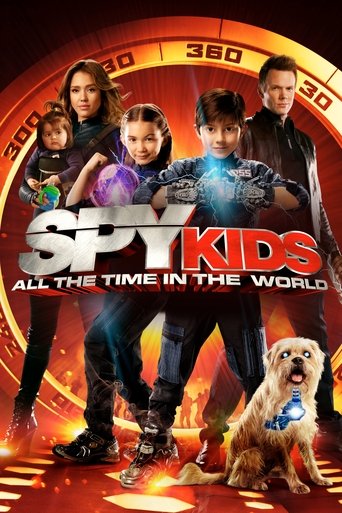
Cover of Spy Kids: All the Time in the World

film

Spy Kids: All the Time in the World

2011

Eight years after the third film, the OSS has become the world's top spy agency, while the Spy Kids department has since become defunct. Retired spy Marissa is called back into action, and to bond with her new stepchildren Rebecca and Cecil, she invites them along to stop the evil Timekeeper from taking over the world.

Ages 7+Source checked

Why this age? Comic spy action includes threats, pursuits, captures, weapons, world-ending stakes, and characters being frozen in time, but the tone is playful and consequences are softened. This is guidance, not a safety guarantee; reading level and family context may differ.

Quick view

At a glance

Recommended age7+

Strongest cautions

  • Frightening scenes3/5
  • Violence3/5
  • Death of a character1/5

Strongest positives

  • Courage & resilience3/5
  • Creativity & curiosity3/5
  • Good role models3/5

What’s in it?

Products & advertising1/5
Why this rating?

Typical franchise tie-ins; the film functions as part of a larger, established commercial series.

Death of a character1/5
Why this rating?

There is a reference to a character's late mother, but no on-screen deaths occur.

Strong language1/5
Why this rating?

Mild language consistent with a PG family movie.

Romance1/5
Why this rating?

Features light themes regarding family reconciliation and marital bond.

Frightening scenes3/5
Why this rating?

Children face intruders, capture, secret lairs, a time-threatening villain, and the prospect of widespread disaster.

Violence3/5
Why this rating?

Frequent comedic spy fights, pursuits, captures, gadgets, and battles with henchmen; violence is fantastical and lightly treated.

What’s good in it?

Courage & resilience3/5
Why this rating?

The twins and adults repeatedly face dangerous villains, rescue missions, and a world-threatening time device with determination.

Creativity & curiosity3/5
Why this rating?

Imaginative gadgets, a talking robot dog, secret spy facilities, time technology, and child-led problem-solving are central attractions.

Diverse representation2/5
Why this rating?

The cast features a multi-ethnic family unit.

Educational value1/5
Why this rating?

Time travel and the Wells Experiment provide light science-fiction concepts, but teaching is not the film's main purpose.

Kindness & empathy3/5
Why this rating?

Family members help and rescue one another, Rebecca offers the villain compassionate advice, and reconciliation is rewarded.

Positive messages3/5
Why this rating?

The story strongly promotes valuing present time, family, responsibility, reconciliation, and making time for loved ones.

Good role models3/5
Why this rating?

Children show ingenuity and bravery, while adults ultimately accept responsibility and repair family relationships, despite earlier secrecy and conflict.

Family discussion

Talk about it

Conversation starters based on this title’s published content notes.

  1. What did courage look like in this story? Was being brave always the same as being fearless?
  2. Which moment felt most tense or frightening? What helped the characters handle fear?
  3. Which choice in Spy Kids: All the Time in the World would you have made differently, and why?
  4. Who changed the most in Spy Kids: All the Time in the World, and what caused that change?
Discuss this title with other parents

Community reactions

What families noticed

Add your perspective

Sign in from the homepage to rate this title.

Where to watch or buy

As an Amazon Associate, Dickens & Rumi may earn from qualifying purchases, at no extra cost to you.

These content notes are a starting point, not a guarantee. Review the evidence and use your own judgment before choosing a title.

Report an incorrect rating