Dickens & Rumi
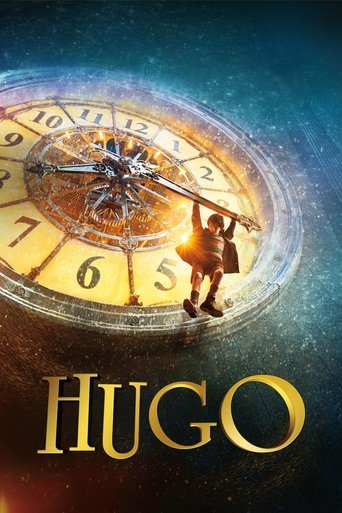
Cover of Hugo

film

Hugo

2011

Orphaned and alone except for an uncle, Hugo Cabret lives in the walls of a train station in 1930s Paris. Hugo's job is to oil and maintain the station's clocks, but to him, his more important task is to protect a broken automaton and notebook left to him by his late father. Accompanied by the goddaughter of an embittered toy merchant, Hugo embarks on a quest to solve the mystery of the automaton and find a place he can call home.

Ages 8+Source checked

Why this age? Generally family-friendly, but young viewers may be unsettled by parental death, orphanhood, an alcoholic uncle, frightening nightmares, and repeated life-threatening train and clock-tower peril. This is guidance, not a safety guarantee; reading level and family context may differ.

Quick view

At a glance

Recommended age8+

Strongest cautions

  • Death of a character3/5
  • Frightening scenes3/5
  • Alcohol or drugs2/5

Strongest positives

  • Creativity & curiosity5/5
  • Courage & resilience4/5
  • Good role models4/5

What’s in it?

Products & advertising1/5
Why this rating?

No overt commercialism or product placement.

Death of a character3/5
Why this rating?

Hugo's father has died, his uncle dies, and the story deals directly with grief, abandonment, and recovering from loss.

Strong language1/5
Why this rating?

Language is very mild.

Romance1/5
Why this rating?

Hugo and Isabelle share a sweet, age-appropriate friendship.

Frightening scenes3/5
Why this rating?

Threatening trains, a guard, dangerous heights, nightmares, and the fear of being sent to an orphanage may unsettle children.

Alcohol or drugs2/5
Why this rating?

Hugo's uncle Claude is described as alcoholic; drinking is part of his characterization but is not the film's focus.

Violence2/5
Why this rating?

Peril includes a boy nearly struck by trains, being pursued, and rough physical danger; violence is limited and not graphic.

What’s good in it?

Courage & resilience4/5
Why this rating?

The children repeatedly face danger, loss, authority, and uncertainty while pursuing truth and helping others.

Creativity & curiosity5/5
Why this rating?

The film itself is a masterful celebration of mechanical invention and the creative process of filmmaking.

Diverse representation2/5
Why this rating?

Features a diverse cast typical of the setting, with strong character arcs.

Educational value3/5
Why this rating?

It introduces early filmmaking, Georges Méliès, film history, mechanical automata, and the value of preserving cultural work.

Kindness & empathy4/5
Why this rating?

Friendship, rescue, adoption, mentorship, and community support become central as isolated characters care for one another.

Positive messages4/5
Why this rating?

Strong themes regarding the importance of purpose, art, kindness, and finding a family.

Good role models4/5
Why this rating?

Hugo and Isabelle show ingenuity, loyalty, curiosity, and courage, though Hugo sometimes steals or breaks rules under pressure.

Family discussion

Talk about it

Conversation starters based on this title’s published content notes.

  1. What was the most imaginative idea in the story, and what would you add to it?
  2. How did the story approach death or loss? What helped the characters cope?
  3. Which choice in Hugo would you have made differently, and why?
  4. Who changed the most in Hugo, and what caused that change?
Discuss this title with other parents

Community reactions

What families noticed

Add your perspective

Sign in from the homepage to rate this title.

Where to watch or buy

As an Amazon Associate, Dickens & Rumi may earn from qualifying purchases, at no extra cost to you.

These content notes are a starting point, not a guarantee. Review the evidence and use your own judgment before choosing a title.

Report an incorrect rating