Dickens & Rumi
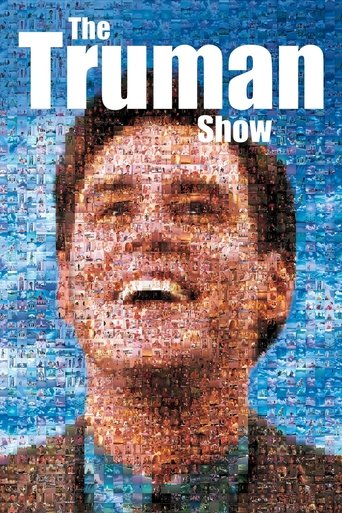
Cover of The Truman Show

film

The Truman Show

1998

In a picture-perfect seaside town, an insurance salesman begins to realize that his entire existence may be staged and observed by a vast unseen audience as part of a long-running real-time reality TV show.

Ages 10+Source checked

Why this age? The film is generally suitable for older children, but its sustained themes of deception, surveillance, loss of autonomy, marital manipulation, a knife threat, and near-drowning may be unsettling or require discussion. This is guidance, not a safety guarantee; reading level and family context may differ.

Quick context

What parents should know

The film is generally suitable for older children, but its sustained themes of deception, surveillance, loss of autonomy, marital manipulation, a knife threat, and near-drowning may be unsettling or require discussion. This is guidance, not a safety guarantee; reading level and family context may differ. Courage & resilience; strongest caution: frightening scenes.

Readiness snapshotAge guidance: 10+Main watch-out: Frightening scenes 3/5
Recommendation 4/5
Review depth16 scored categories16 evidence notes

Quick view

At a glance

Recommended age10+

Strongest cautions

  • Frightening scenes3/5
  • Products & advertising3/5
  • Romance3/5

Strongest positives

  • Courage & resilience5/5
  • Creativity & curiosity4/5
  • Positive messages4/5

Keep going

What should you do next?

One review should lead naturally to the next useful choice.

What’s in it?

Products & advertising3/5
Why this rating?

Commercial product placement and advertising are central to the fictional television show's manipulation of Truman, though the film is not primarily a buying-oriented work.
Death of a character2/5
Why this rating?

Truman believes his father died in a boating accident; the death is staged, and the father later reappears. Truman nearly dies at sea.

Strong language1/5
Why this rating?

Contains very mild language suitable for a general audience.

Religious themes1/5
Why this rating?

Religious belief or practice is not a prominent part of the film's story.

Romance3/5
Why this rating?

Romance and marriage are important to Truman's story, including his controlled marriage and his continuing feelings for Sylvia.

Frightening scenes3/5
Why this rating?

Paranoia, constant surveillance, manipulation, confinement, a staged parental death, and a violent storm create sustained psychological tension.

Sexual content & nudity1/5
Why this rating?

Very mild innuendo related to the performative nature of the marriage.

Alcohol or drugs1/5
Why this rating?

Background scenes may show mild social drinking in a television context.

Violence2/5
Why this rating?

Limited physical violence, including a knife threat and attempts to stop Truman's escape; a storm is deliberately created to endanger him.

What’s good in it?

Courage & resilience5/5
Why this rating?

Truman shows immense courage by overcoming his deep-seated phobias to seek the truth.

Creativity & curiosity4/5
Why this rating?

Extremely creative premise that challenges the viewer's perception of reality.

Diverse representation1/5
Why this rating?

Standard representation for its era and setting; not a focal point of the story.

Educational value2/5
Why this rating?

Encourages discussion of media ethics, surveillance, privacy, consent, reality television, manipulation, and existential questions.

Kindness & empathy2/5
Why this rating?

Sylvia and some viewers show compassion for Truman, but most of his community knowingly deceives and controls him.

Positive messages4/5
Why this rating?

Strong themes regarding personal agency, authenticity, and questioning authority.

Good role models3/5
Why this rating?

Truman ultimately demonstrates persistence, curiosity, moral courage, and independence, despite initially trusting a deceptive community.

Family discussion

Talk about it

Conversation starters based on this title’s published content notes.

  1. What did courage look like in this story? Was being brave always the same as being fearless?
  2. Which moment felt most tense or frightening? What helped the characters handle fear?
  3. Which choice in The Truman Show would you have made differently, and why?
  4. Who changed the most in The Truman Show, and what caused that change?
Discuss this title with other parents

Community reactions

What families noticed

Add your perspective

Sign in from the homepage to rate this title.

Where to watch or buy

As an Amazon Associate, Dickens & Rumi may earn from qualifying purchases, at no extra cost to you.

These content notes are a starting point, not a guarantee. Review the evidence and use your own judgment before choosing a title.

Something wrong with this guide? Report age, caution, series, cover, or title issues.