Dickens & Rumi
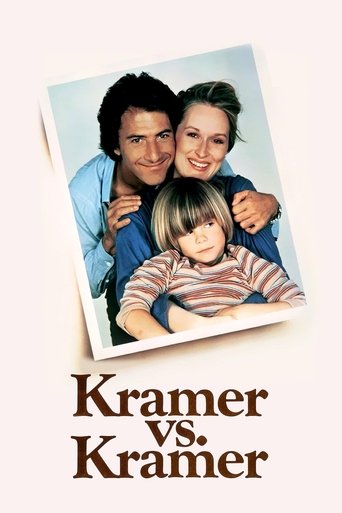
Cover of Kramer vs. Kramer

film

Kramer vs. Kramer

1979

Ted Kramer is a career man for whom his work comes before his family. His wife Joanna cannot take this anymore, so she decides to leave him. Ted is now faced with the tasks of housekeeping and taking care of himself and their young son Billy.

Ages 13+Source checked

Why this age? The film deals seriously with divorce, parental abandonment, custody litigation, unemployment, and a child’s distress. A hospital visit and angry glass-smashing add intensity, though violence and sexual content are limited. This is guidance, not a safety guarantee; reading level and family context may differ.

Quick view

At a glance

Recommended age13+

Strongest cautions

  • Romance2/5
  • Strong language2/5
  • Alcohol or drugs1/5

Strongest positives

  • Positive messages4/5
  • Courage & resilience3/5
  • Good role models3/5

What’s in it?

Products & advertising1/5
Why this rating?

Some incidental brand names common to the era appear, but no overt product placement or commercial push.

Graphic injury1/5
Why this rating?

Brief scene of a child in a hospital receiving stitches after an accident, but not excessively graphic.

Strong language2/5
Why this rating?

Features some realistic, moderate language typical of tense domestic arguments.

Romance2/5
Why this rating?

Marriage, its breakdown, and an adult friendship are important, but the story centers on parenting and custody rather than romance.

Sexual content & nudity1/5
Why this rating?

Very minimal, mostly limited to brief references to adult relationships and the context of the divorce.

Alcohol or drugs1/5
Why this rating?

Social drinking occurs in professional and domestic settings, reflecting 1970s adult behavior.

Violence1/5
Why this rating?

No sustained violence is indicated. An angry adult smashes a wine glass against a wall, and a child is injured in a playground accident.

What’s good in it?

Courage & resilience3/5
Why this rating?

Ted faces job loss, legal conflict, and the possibility of losing his son; both parents eventually make difficult choices for Billy’s welfare.

Creativity & curiosity1/5
Why this rating?

Encourages empathy and perspective-taking through a realistic exploration of complex emotional human experiences.

Diverse representation1/5
Why this rating?

Reflects the limited representation of the late 1970s; characters are primarily white professionals in NYC.

Educational value2/5
Why this rating?

It offers substantial insight into divorce, custody law, parenting, work-life balance, and changing social expectations about gender roles.

Kindness & empathy3/5
Why this rating?

Care and compassion emerge through parenting, friendship, reconciliation, and decisions intended to reduce Billy’s distress, despite significant conflict.

Positive messages4/5
Why this rating?

Strong themes include parental responsibility, empathy, acknowledging mistakes, child-centered decisions, and challenging traditional gender roles.

Good role models3/5
Why this rating?

Adults make serious mistakes, but Ted grows into a committed parent and both parents ultimately consider Billy’s emotional needs.

Family discussion

Talk about it

Conversation starters based on this title’s published content notes.

  1. What message do you think the story most wants you to remember?
  2. How did relationships or romance affect the characters’ choices?
  3. Which choice in Kramer vs. Kramer would you have made differently, and why?
  4. Who changed the most in Kramer vs. Kramer, and what caused that change?
Discuss this title with other parents

Community reactions

What families noticed

Add your perspective

Sign in from the homepage to rate this title.

Where to watch or buy

As an Amazon Associate, Dickens & Rumi may earn from qualifying purchases, at no extra cost to you.

These content notes are a starting point, not a guarantee. Review the evidence and use your own judgment before choosing a title.

Report an incorrect rating