Death of a character4/5
film
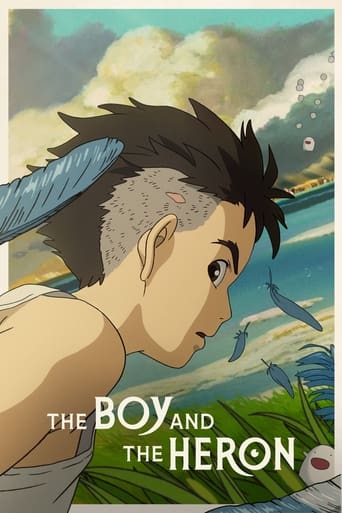
The Boy and the Heron
While the Second World War rages, the teenage Mahito, haunted by his mother's tragic death, is relocated from Tokyo to the serene rural home of his new stepmother Natsuko, a woman who bears a striking resemblance to the boy's mother. As he tries to adjust, this strange new world grows even stranger following the appearance of a persistent gray heron, who perplexes and bedevils Mahito, dubbing him the "long-awaited one."
Ages 13+Source checked
Want age- and preference-matched picks?Set up a reader profile on the homepage and Dickens & Rumi will tailor future recommendations.Set up a reader
Quick context
What parents should know
PG-13 themes include a parent’s death, wartime danger, grief, peril, unsettling creatures and imagery, family disruption, and intellectually demanding fantasy symbolism. This is guidance, not a safety guarantee; reading level and family context may differ. Creativity & curiosity; strongest caution: death of a character.
Readiness snapshotAge guidance: 13+Main watch-out: Death of a character 4/5
Recommendation 4/5Quick view
At a glance
Recommended age13+
Strongest cautions
- Death of a character4/5
- Frightening scenes4/5
- Violence3/5
Strongest positives
- Creativity & curiosity5/5
- Courage & resilience4/5
- Positive messages4/5
What’s in it?
Checked and not flagged
No concern recorded in these categories
These categories were explicitly scored 0/5 in the published review. This is not a guarantee that every edition or reader experience is identical.
Sexual content & nudity · 0/5
What’s good in it?
Family discussion
Talk about it
Conversation starters based on this title’s published content notes.
- What was the most imaginative idea in the story, and what would you add to it?
- How did the story approach death or loss? What helped the characters cope?
- Which choice in The Boy and the Heron would you have made differently, and why?
- Who changed the most in The Boy and the Heron, and what caused that change?
Community reactions
What families noticed
Add your perspective
Sign in from the homepage to rate this title.
Where to watch or buy
As an Amazon Associate, Dickens & Rumi may earn from qualifying purchases, at no extra cost to you.
These content notes are a starting point, not a guarantee. Review the evidence and use your own judgment before choosing a title.
Something wrong with this guide? Report age, caution, series, cover, or title issues.