Dickens & Rumi
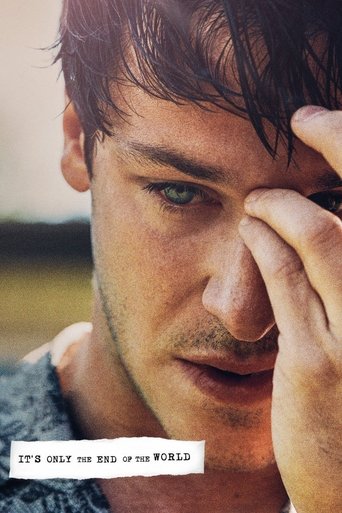
Cover of It's Only the End of the World

film

It's Only the End of the World

2016

Louis, a terminally ill writer, returns home after a long absence to tell his family that he is dying.

Ages 15+Source checked

Why this age? The film features intense emotional confrontations, complex themes regarding terminal illness and family estrangement, and frequent aggressive language and yelling that requires a level of emotional maturity to process. This is guidance, not a safety guarantee; reading level and family context may differ.

Quick view

At a glance

Recommended age15+

Strongest cautions

  • Death of a character4/5
  • LGBTQIA characters3/5
  • Strong language3/5

Strongest positives

  • Positive messages3/5
  • Courage & resilience2/5
  • Creativity & curiosity2/5

What’s in it?

Death of a character4/5
Why this rating?

The protagonist is terminally ill and facing death, and mentions a past partner who died from cancer.

Strong language3/5
Why this rating?

Contains frequent heated arguments and occasional strong language in a familial context.

LGBTQIA characters3/5
Why this rating?

The protagonist is gay, and his previous same-sex relationship is mentioned, though it is one facet of his identity, not the primary plot point.

Romance2/5
Why this rating?

Past relationships are discussed, but romance is not a central focus of the plot.

Frightening scenes1/5
Why this rating?

The film is a psychological drama; it contains no horror elements.

Sexual content & nudity1/5
Why this rating?

No explicit sexual content or nudity.

Alcohol or drugs2/5
Why this rating?

Louis and Antoine go to buy cigarettes, indicating smoking-related content without evidence that substance use is a major theme.

Violence1/5
Why this rating?

Includes verbal aggression, shouting, and a sense of emotional brutality between family members.

What’s good in it?

Courage & resilience2/5
Why this rating?

Returning home to face family after a long absence and living with terminal illness require emotional courage, even though Louis ultimately avoids telling them.

Creativity & curiosity2/5
Why this rating?

Louis is a playwright and the film uses a play-based, dialogue-centered approach, but creativity is not a major practical problem-solving theme.

Diverse representation2/5
Why this rating?

The film gives a gay protagonist and a complex family central agency, though the supplied material does not establish broad representation beyond that.

Educational value1/5
Why this rating?

Provides insight into complex interpersonal psychology and family dynamics.

Kindness & empathy1/5
Why this rating?

There are efforts to apologize, welcome Louis and maintain family ties, but these are repeatedly overwhelmed by resentment and hostile arguments.

Positive messages3/5
Why this rating?

Highlights the harm of secrecy and estrangement and the value of family connection, but its unresolved, tragic ending offers a nuanced rather than strongly instructive lesson.

Good role models2/5
Why this rating?

Characters show vulnerability and some attempts to apologize or reconnect, but repeated resentment, secrecy and verbal aggression limit their modeling value.

Family discussion

Talk about it

Conversation starters based on this title’s published content notes.

  1. What message do you think the story most wants you to remember?
  2. How did the story approach death or loss? What helped the characters cope?
  3. Which choice in It's Only the End of the World would you have made differently, and why?
  4. Who changed the most in It's Only the End of the World, and what caused that change?
Discuss this title with other parents

Community reactions

What families noticed

Add your perspective

Sign in from the homepage to rate this title.

Where to watch or buy

As an Amazon Associate, Dickens & Rumi may earn from qualifying purchases, at no extra cost to you.

These content notes are a starting point, not a guarantee. Review the evidence and use your own judgment before choosing a title.

Report an incorrect rating