Dickens & Rumi
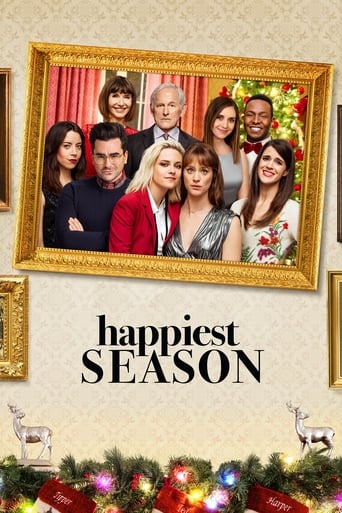
Cover of Happiest Season

film

Happiest Season

2020

A young woman's plans to propose to her girlfriend while at her family's annual holiday party are upended when she discovers her partner hasn't yet come out to her conservative parents.

Ages 13+Source checked

Why this age? PG-13 themes include coming out, family rejection, relationship conflict, emotional distress, kissing, and some mature romantic or sexual references. The treatment is generally comedic, heartfelt, and hopeful. This is guidance, not a safety guarantee; reading level and family context may differ.

Quick view

At a glance

Recommended age13+

Strongest cautions

  • LGBTQIA characters5/5
  • Romance5/5
  • Alcohol or drugs2/5

Strongest positives

  • Courage & resilience4/5
  • Diverse representation4/5
  • Positive messages4/5

What’s in it?

Products & advertising1/5
Why this rating?

Brief mentions of shopping and general holiday gift-giving tropes.

Death of a character1/5
Why this rating?

The protagonist's parents are deceased, mentioned as backstory.

Strong language2/5
Why this rating?

Some mild profanity and occasional stronger language are reported, but the supplied excerpts do not document specific words or frequency.

LGBTQIA characters5/5
Why this rating?

The film centers entirely on lesbian characters and the process of coming out.

Religious themes1/5
Why this rating?

Christmas is the setting, but religious content is incidental to the holiday context.

Romance5/5
Why this rating?

The film centers on a lesbian couple’s relationship, proposal, conflict, reconciliation, kissing, and eventual engagement.

Frightening scenes1/5
Why this rating?

No scary content.

Sexual content & nudity2/5
Why this rating?

Some mild innuendo and talk about relationships.

Alcohol or drugs2/5
Why this rating?

Adults are shown drinking alcohol at holiday gatherings. The available evidence does not suggest drug use or glamorized substance misuse.

Violence1/5
Why this rating?

Includes some verbal arguments and a brief physical scuffle between sisters.

What’s good in it?

Courage & resilience4/5
Why this rating?

Coming out to conservative family members is depicted as an act of significant courage.

Creativity & curiosity2/5
Why this rating?

A typical rom-com structure with some character-driven humor.

Diverse representation4/5
Why this rating?

Features a prominent LGBTQIA cast and nuanced portrayals of family conflict.

Educational value1/5
Why this rating?

Offers insight into the experience of coming out and family dynamics.

Kindness & empathy3/5
Why this rating?

Friendship, empathy, encouragement, apology, and eventual family inclusion are important parts of the resolution.

Positive messages4/5
Why this rating?

Promotes honesty, authenticity, and the importance of family acceptance.

Good role models3/5
Why this rating?

Characters make hurtful choices, especially through deception and pressure, but take responsibility, apologize, support one another, and grow.

Family discussion

Talk about it

Conversation starters based on this title’s published content notes.

  1. What did courage look like in this story? Was being brave always the same as being fearless?
  2. How are identity and relationships presented, and how do they shape the characters’ experiences?
  3. Which choice in Happiest Season would you have made differently, and why?
  4. Who changed the most in Happiest Season, and what caused that change?
Discuss this title with other parents

Community reactions

What families noticed

Add your perspective

Sign in from the homepage to rate this title.

Where to watch or buy

As an Amazon Associate, Dickens & Rumi may earn from qualifying purchases, at no extra cost to you.

These content notes are a starting point, not a guarantee. Review the evidence and use your own judgment before choosing a title.

Report an incorrect rating