Dickens & Rumi
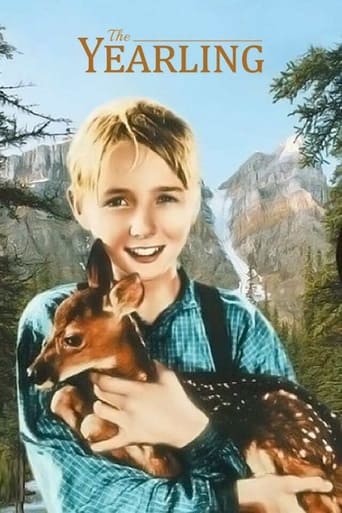
Cover of The Yearling

film

The Yearling

1946

Jody convinces his parents to allow him to adopt a young deer, but what will happen if the deer misbehaves?

Ages 10+Source checked

Why this age? The story includes rural hardship, danger, hunting-related peril, and a deeply sad treatment of animal loss. The emotional themes and slower classic-film style may be challenging for younger children. This is guidance, not a safety guarantee; reading level and family context may differ.

Quick view

At a glance

Recommended age10+

Strongest cautions

  • Death of a character4/5
  • Frightening scenes3/5
  • Violence2/5

Strongest positives

  • Courage & resilience4/5
  • Kindness & empathy4/5
  • Positive messages4/5

Keep going

What should you do next?

One review should lead naturally to the next useful choice.

What’s in it?

Death of a character4/5
Why this rating?

The death of animals and the underlying theme of loss are central to the film's narrative.

Graphic injury1/5
Why this rating?

Brief, non-graphic depictions of injury or blood related to hunting or animal attacks.

Strong language1/5
Why this rating?

Period-appropriate, mild language; no profanity.

Religious themes1/5
Why this rating?

Faith may appear as background cultural context for the period and setting, but it is not a prominent focus.

Romance1/5
Why this rating?

Adult romantic dynamics are present but minimal and not the focus.

Frightening scenes3/5
Why this rating?

A fawn faces predators, a rattlesnake, storms, and other dangers; the suspense is realistic and emotionally tense rather than horror-based.

Alcohol or drugs1/5
Why this rating?

Occasional scenes of adults consuming medicinal or social alcohol.

Violence2/5
Why this rating?

Includes hunting scenes, a rattlesnake encounter, and a tense confrontation with a wild animal.

What’s good in it?

Courage & resilience4/5
Why this rating?

Characters exhibit quiet bravery in the face of natural hardship and emotional sorrow.

Creativity & curiosity3/5
Why this rating?

The boy’s imaginative bond with the deer and resourceful responses to rural challenges can encourage empathy and observation of nature.

Diverse representation1/5
Why this rating?

Historical representation of early Florida settlers; limited by the time of production.

Educational value2/5
Why this rating?

Provides a glimpse into 19th-century rural frontier life.

Kindness & empathy4/5
Why this rating?

Care for the fawn and concern for family are central, though affection is tested by practical responsibilities and difficult choices.

Positive messages4/5
Why this rating?

Emphasizes responsibility, family bonds, accepting consequences, compassion for animals, and growing through hardship and loss.

Good role models3/5
Why this rating?

The parents are depicted as hardworking, devoted, and loving, despite the challenges they face.

Family discussion

Talk about it

Conversation starters based on this title’s published content notes.

  1. What did courage look like in this story? Was being brave always the same as being fearless?
  2. How did the story approach death or loss? What helped the characters cope?
  3. Which choice in The Yearling would you have made differently, and why?
  4. Who changed the most in The Yearling, and what caused that change?
Discuss this title with other parents

Community reactions

What families noticed

Add your perspective

Sign in from the homepage to rate this title.

Where to watch or buy

As an Amazon Associate, Dickens & Rumi may earn from qualifying purchases, at no extra cost to you.

These content notes are a starting point, not a guarantee. Review the evidence and use your own judgment before choosing a title.

Something wrong with this guide? Report age, caution, series, cover, or title issues.