Dickens & Rumi
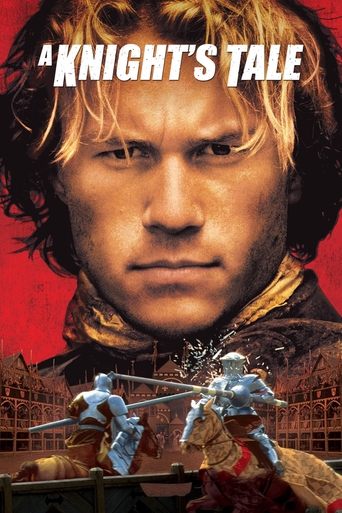
Cover of A Knight's Tale

film

A Knight's Tale

2001

William Thatcher, a knight's peasant apprentice, gets a chance at glory when the knight dies suddenly mid-tournament. Posing as a knight himself, William won't stop until he's crowned tournament champion—assuming matters of the heart don't get in the way.

Ages 13+Source checked

Why this age? Frequent stylized but sometimes serious jousting and sword violence, injury, imprisonment, romance, drinking, gambling, mild language, and brief sexual material make this better suited to early teens. This is guidance, not a safety guarantee; reading level and family context may differ.

Quick view

At a glance

Recommended age13+

Strongest cautions

  • Violence4/5
  • Romance3/5
  • Alcohol or drugs2/5

Strongest positives

  • Courage & resilience4/5
  • Creativity & curiosity3/5
  • Good role models3/5

What’s in it?

Products & advertising1/5
Why this rating?

The film has commercial tie-in potential and modern pop-cultural styling, but it is not built around product promotion or brand placement.
Death of a character2/5
Why this rating?

William's master dies before the story begins, and the death is discussed rather than serving as a sustained on-screen tragedy.

Graphic injury2/5
Why this rating?

Some minor blood during jousting injuries; a character is shown briefly with a serious puncture wound.

Strong language2/5
Why this rating?

Features mild profanity and some name-calling consistent with its PG-13 rating.

Religious themes1/5
Why this rating?

Brief mentions of church figures and religious terminology common to the setting.

Romance3/5
Why this rating?

William and Jocelyn's relationship is a major subplot involving attraction, courtship, jealousy, embraces, and marriage expectations.

Frightening scenes2/5
Why this rating?

Dangerous tournaments, hostile crowds, imprisonment, and threatening confrontations create tension without sustained horror.

Sexual content & nudity2/5
Why this rating?

Contains some flirtatious banter, implied sexual situations, and suggestive humor.

Alcohol or drugs2/5
Why this rating?

Frequent consumption of alcohol (ale/wine) in tavern and social settings.

Violence4/5
Why this rating?

Jousting, sword fights, duels, beatings, and combat occur repeatedly; a character is seriously injured, though the tone is often comic and adventurous.

What’s good in it?

Courage & resilience4/5
Why this rating?

Characters repeatedly face dangerous competition, social risk, imprisonment, injury, and injustice with determination and loyalty.

Creativity & curiosity3/5
Why this rating?

Inventive armor, forged identity, strategic tournament choices, performance, modern music, and playful anachronism encourage imaginative engagement.

Diverse representation2/5
Why this rating?

The cast is primarily white, consistent with the film's 2001 production context, though it features a strong female character.

Educational value1/5
Why this rating?

The film offers some medieval tournament and social context, but its intentional anachronisms make entertainment rather than instruction its purpose.

Kindness & empathy3/5
Why this rating?

Friends support one another, defend William, help Chaucer, and show loyalty; compassion and solidarity are recurring strengths.

Positive messages3/5
Why this rating?

It emphasizes friendship, loyalty, perseverance, personal honor, earned identity, and challenging unfair class barriers, while also treating deception as a plot complication.

Good role models3/5
Why this rating?

William and his friends show loyalty, courage, and solidarity, though William's impersonation, gambling, and revenge impulses require judgment.

Family discussion

Talk about it

Conversation starters based on this title’s published content notes.

  1. What did courage look like in this story? Was being brave always the same as being fearless?
  2. How did the story handle conflict or violence? Did the characters have other choices?
  3. Which choice in A Knight's Tale would you have made differently, and why?
  4. Who changed the most in A Knight's Tale, and what caused that change?
Discuss this title with other parents

Community reactions

What families noticed

Add your perspective

Sign in from the homepage to rate this title.

Where to watch or buy

As an Amazon Associate, Dickens & Rumi may earn from qualifying purchases, at no extra cost to you.

These content notes are a starting point, not a guarantee. Review the evidence and use your own judgment before choosing a title.

Report an incorrect rating