Dickens & Rumi
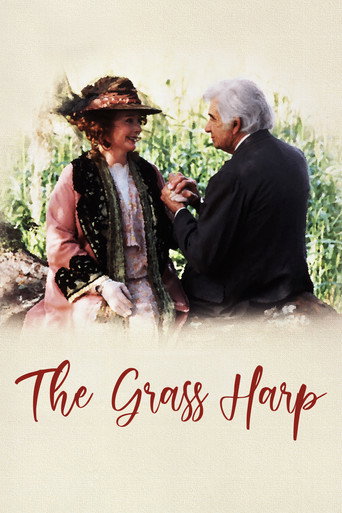
Cover of The Grass Harp

film

The Grass Harp

1996

Based on the novel by Truman Capote, this often-witty coming-of-age drama looks at a young man growing up with an unusual family in the Deep South in the 1940s. Becoming an orphan in 1935, Collin moves to his dad's cousins Verena and Dolly. Verena is a rich, bossy businesswoman. Dolly, Collin and the maid revolt, moving to a tree house.

Ages 10+Source checked

Why this age? The film’s main concerns include orphanhood, the loss of a loved one, family control, emotional conflict, and coming of age. These are likely manageable for many children around 10, though younger viewers may need support. This is guidance, not a safety guarantee; reading level and family context may differ.

Quick view

At a glance

Recommended age10+

Strongest cautions

  • Death of a character2/5
  • Romance2/5
  • Alcohol or drugs1/5

Strongest positives

  • Courage & resilience3/5
  • Creativity & curiosity3/5
  • Good role models3/5

What’s in it?

Death of a character2/5
Why this rating?

Collin becomes an orphan, and the story explicitly involves loss of a loved one; grief appears relevant without evidence of graphic depiction.
Strong language1/5
Why this rating?

Language appears limited to mild, period-appropriate expressions or insults rather than strong profanity or slurs.

Religious themes1/5
Why this rating?

Southern cultural or religious background may be present, but faith and religious practice do not appear central to the story.

Romance2/5
Why this rating?

Features gentle, understated romantic subplots and unrequited love.

Frightening scenes1/5
Why this rating?

Some mild tension regarding family dynamics and feeling ostracized.

Alcohol or drugs1/5
Why this rating?

Some smoking may occur in the 1930s–40s setting; no drug use or substance-focused storyline is identified.

Violence1/5
Why this rating?

Minor verbal conflict and slight scuffles; no graphic violence.

What’s good in it?

Courage & resilience3/5
Why this rating?

Characters show courage by choosing non-conformity to maintain their values.

Creativity & curiosity3/5
Why this rating?

Celebrates unconventional living and finding beauty in nature.

Diverse representation2/5
Why this rating?

Includes historical representation of the period, though limited in diversity scope.

Educational value1/5
Why this rating?

Offers a window into 1940s Southern US culture and social structures.

Kindness & empathy3/5
Why this rating?

Kindness and empathy are core themes of the narrative.

Positive messages3/5
Why this rating?

Promotes independence, authenticity, and the importance of choosing one's family.

Good role models3/5
Why this rating?

Characters demonstrate resilience and compassion.

Family discussion

Talk about it

Conversation starters based on this title’s published content notes.

  1. What did courage look like in this story? Was being brave always the same as being fearless?
  2. How did the story approach death or loss? What helped the characters cope?
  3. Which choice in The Grass Harp would you have made differently, and why?
  4. Who changed the most in The Grass Harp, and what caused that change?
Discuss this title with other parents

Community reactions

What families noticed

Add your perspective

Sign in from the homepage to rate this title.

Where to watch or buy

As an Amazon Associate, Dickens & Rumi may earn from qualifying purchases, at no extra cost to you.

These content notes are a starting point, not a guarantee. Review the evidence and use your own judgment before choosing a title.

Report an incorrect rating