Dickens & Rumi
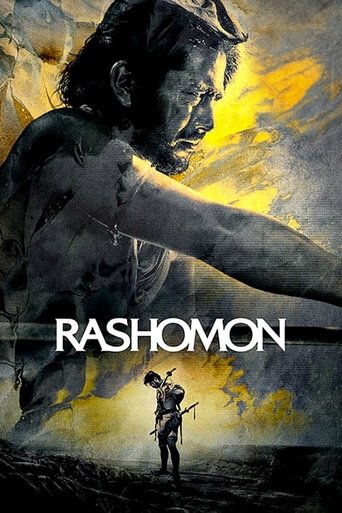
Cover of Rashomon

film

Rashomon

1950

Four people recount different versions of the story of a man's murder and the rape of his wife.

Ages 16+Source checked

Why this age? Repeated adult themes include sexual assault, murder, suicide, coercion, disturbing gender violence, and morally bleak behavior. The complex structure and psychological ambiguity also require mature viewing. This is guidance, not a safety guarantee; reading level and family context may differ.

Quick view

At a glance

Recommended age16+

Strongest cautions

  • Death of a character4/5
  • Sexual content & nudity4/5
  • Violence4/5

Strongest positives

  • Creativity & curiosity5/5
  • Positive messages4/5
  • Educational value3/5

What’s in it?

Death of a character4/5
Why this rating?

The entire plot revolves around the murder of a samurai and the varying accounts of his death.

Graphic injury1/5
Why this rating?

Minimal gore; focus is on the narrative rather than graphic imagery.

Strong language1/5
Why this rating?

Subtitles feature period-appropriate formal or harsh language, but no strong profanity.

Religious themes2/5
Why this rating?

Buddhist monk is a main character; Shinto spiritual practices are depicted regarding the dead.

Romance2/5
Why this rating?

The relationship between the samurai and his wife is central but depicted with infidelity and betrayal.

Frightening scenes3/5
Why this rating?

Atmospheric tension and a sequence involving a medium channeling a spirit, which may be unsettling.

Sexual content & nudity4/5
Why this rating?

The film hinges on the narrative of a sexual assault, handled with intense dramatic weight rather than exploitation.

Violence4/5
Why this rating?

Depicts murder, sword fighting, and the aftermath of physical struggle; while not gratuitous, the themes are intense.

What’s good in it?

Courage & resilience2/5
Why this rating?

The moral struggle to tell the truth against self-preservation is a quiet form of courage.

Creativity & curiosity5/5
Why this rating?

Its radically conflicting testimonies, framing structure, visual experimentation, and unreliable perspectives strongly encourage imaginative and critical thinking.

Diverse representation1/5
Why this rating?

Represents Heian-period Japanese society; diverse in terms of social class and human perspectives.

Educational value3/5
Why this rating?

It can prompt discussion of film language, unreliable narration, ethics, Japanese history, and perspective, though teaching is not its primary purpose.

Kindness & empathy2/5
Why this rating?

The choice to care for an abandoned infant serves as the emotional resolution of the story.

Positive messages4/5
Why this rating?

Explores profound philosophical questions about honesty, ego, and the capacity for altruism.

Good role models2/5
Why this rating?

Most adults lie, exploit, steal, or act selfishly, but the woodcutter's final choice to care for the abandoned child offers a meaningful positive example.

Family discussion

Talk about it

Conversation starters based on this title’s published content notes.

  1. What was the most imaginative idea in the story, and what would you add to it?
  2. How did the story approach death or loss? What helped the characters cope?
  3. Which choice in Rashomon would you have made differently, and why?
  4. Who changed the most in Rashomon, and what caused that change?
Discuss this title with other parents

Community reactions

What families noticed

Add your perspective

Sign in from the homepage to rate this title.

Where to watch or buy

As an Amazon Associate, Dickens & Rumi may earn from qualifying purchases, at no extra cost to you.

These content notes are a starting point, not a guarantee. Review the evidence and use your own judgment before choosing a title.

Report an incorrect rating