Dickens & Rumi
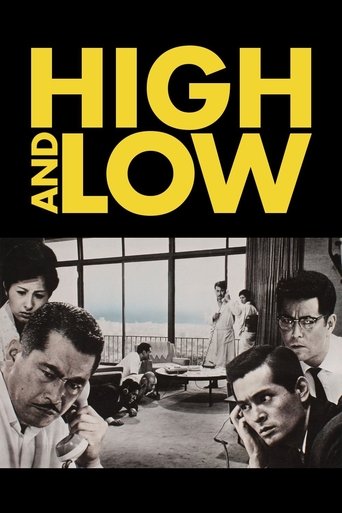
Cover of High and Low

film

High and Low

1963

A Yokohama shoe executive faces a wrenching choice when kidnappers mistakenly seize his chauffeur’s son but demand the ransom anyway.

Ages 15+Source checked

Why this age? The film involves kidnapping, blackmail, criminal investigation, death-related peril, heroin, and sustained psychological tension. Its serious pacing and moral complexity suit older teens. This is guidance, not a safety guarantee; reading level and family context may differ.

Quick view

At a glance

Recommended age15+

Strongest cautions

  • Frightening scenes4/5
  • Alcohol or drugs3/5
  • Death of a character3/5

Strongest positives

  • Courage & resilience4/5
  • Positive messages4/5
  • Creativity & curiosity3/5

What’s in it?

Products & advertising2/5
Why this rating?

Features a shoe company, but is purely narrative and not promotional.

Death of a character3/5
Why this rating?

The film explores themes of loss and the high stakes of potential death; some characters die as a result of their criminal lifestyle.

Graphic injury1/5
Why this rating?

Depictions of heroin addiction and squalor are gritty, but there is minimal blood or visceral injury.

Strong language2/5
Why this rating?

Occasional tense language reflecting the desperation of the characters.

Frightening scenes4/5
Why this rating?

A child kidnapping, ransom threat, pursuit and anxious noir tone create sustained, intense suspense, with a child’s safety at stake.

Sexual content & nudity1/5
Why this rating?

No sexual content.

Alcohol or drugs3/5
Why this rating?

Heroin is an explicit crime-story element and contributes to the film’s mature subject matter.

Violence3/5
Why this rating?

Includes tense situations, threats of harm, and realistic criminal activity, but is not gratuitous.

What’s good in it?

Courage & resilience4/5
Why this rating?

Characters confront threats, social pressure, and painful moral choices with significant personal and professional courage.

Creativity & curiosity3/5
Why this rating?

Strategic investigation and inventive police methods encourage analytical problem-solving, though cinematic craft alone does not establish a top creativity score.

Diverse representation2/5
Why this rating?

The story meaningfully contrasts social classes and roles in mid-century Japan, but evidence for broader representation across identities or abilities is limited.

Educational value2/5
Why this rating?

It offers substantial insight into criminal investigation, Japanese society, class relations, and moral decision-making, though education is not its primary intent.

Kindness & empathy2/5
Why this rating?

Kindness is explored through the struggle between selfishness and human empathy.

Positive messages4/5
Why this rating?

The story examines moral responsibility, privilege, class inequality, sacrifice, justice, and the consequences of greed and cruelty.

Good role models3/5
Why this rating?

The protagonist faces a difficult moral choice, reflecting growth and personal responsibility.

Family discussion

Talk about it

Conversation starters based on this title’s published content notes.

  1. What did courage look like in this story? Was being brave always the same as being fearless?
  2. Which moment felt most tense or frightening? What helped the characters handle fear?
  3. Which choice in High and Low would you have made differently, and why?
  4. Who changed the most in High and Low, and what caused that change?
Discuss this title with other parents

Community reactions

What families noticed

Add your perspective

Sign in from the homepage to rate this title.

Where to watch or buy

As an Amazon Associate, Dickens & Rumi may earn from qualifying purchases, at no extra cost to you.

These content notes are a starting point, not a guarantee. Review the evidence and use your own judgment before choosing a title.

Report an incorrect rating