Dickens & Rumi
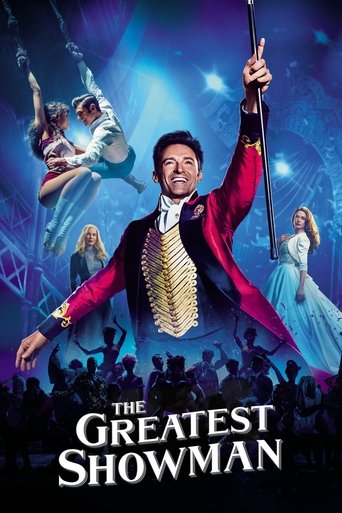
Cover of The Greatest Showman

film

The Greatest Showman

2017

The story of American showman P.T. Barnum, founder of the circus that became the famous traveling Ringling Bros. and Barnum & Bailey Circus.

Ages 10+Source checked

Why this age? The film has sustained themes of prejudice and social exclusion, marital strain and infidelity-related scandal, dangerous circus situations, a destructive fire, and a serious injury. Musical presentation and hopeful resolutions make it broadly accessible to many preteens. This is guidance, not a safety guarantee; reading level and family context may differ.

Quick context

What parents should know

The film has sustained themes of prejudice and social exclusion, marital strain and infidelity-related scandal, dangerous circus situations, a destructive fire, and a serious injury. Musical presentation and hopeful resolutions make it broadly accessible to many preteens. This is guidance, not a safety guarantee; reading level and family context may differ. Courage & resilience; strongest caution: romance.

Readiness snapshotAge guidance: 10+Main watch-out: Romance 3/5
Recommendation 4/5
Review depth15 scored categories15 evidence notes

Quick view

At a glance

Recommended age10+

Strongest cautions

  • Romance3/5
  • Frightening scenes2/5
  • Violence2/5

Strongest positives

  • Courage & resilience4/5
  • Creativity & curiosity4/5
  • Diverse representation4/5

Keep going

What should you do next?

One review should lead naturally to the next useful choice.

What’s in it?

Products & advertising1/5
Why this rating?

Standard film merchandising; no overt product placement within the story.

Strong language1/5
Why this rating?

Very mild language, mostly focused on insults from antagonists regarding the performers.

Romance3/5
Why this rating?

Marriage, enduring romantic love, an interracial romance facing prejudice, attraction, jealousy, and reconciliation are important story elements.

Frightening scenes2/5
Why this rating?

A serious circus fire and rescue create brief, intense danger, with injuries and social hostility. There are no frightening creatures or sustained horror elements.

Sexual content & nudity1/5
Why this rating?

Romantic attraction and kisses are present, including a retaliatory public kiss, but no explicit sexual activity or sexualized nudity is indicated.

Alcohol or drugs1/5
Why this rating?

Characters are seen in bars, and drinking is depicted as a social activity.

Violence2/5
Why this rating?

Protesters fight with circus performers, and a character is injured while rescuing someone from a burning circus. Conflict is brief and non-graphic.

Checked and not flagged

No concern recorded in these categories

These categories were explicitly scored 0/5 in the published review. This is not a guarantee that every edition or reader experience is identical.

Graphic injury · 0/5

What’s good in it?

Courage & resilience4/5
Why this rating?

Characters confront harassment, social prejudice, fear, and physical danger; Phillip risks serious injury trying to rescue Anne.

Creativity & curiosity4/5
Why this rating?

Inventive show-building, music, performance, publicity, and imaginative problem-solving drive the narrative and strongly encourage creative self-expression.

Diverse representation4/5
Why this rating?

The troupe includes performers marginalized for appearance, disability, race, or social status, and Anne and Phillip's relationship challenges racial and class prejudice.

Educational value1/5
Why this rating?

Historical fiction; provides light insight into 19th-century entertainment but is highly dramatized.

Kindness & empathy4/5
Why this rating?

The troupe supports one another as a chosen family, characters protect each other, and reconciliation follows empathy and recognition of harm.

Positive messages4/5
Why this rating?

It emphasizes belonging, resisting prejudice, valuing family over status, accepting oneself, and recognizing that ambition and exploitation have consequences.

Good role models3/5
Why this rating?

Performers show loyalty and courage, while Barnum's ambition, deception, and neglect of family provide clear flaws that require accountability and change.

Family discussion

Talk about it

Conversation starters based on this title’s published content notes.

  1. What did courage look like in this story? Was being brave always the same as being fearless?
  2. How did relationships or romance affect the characters’ choices?
  3. Which choice in The Greatest Showman would you have made differently, and why?
  4. Who changed the most in The Greatest Showman, and what caused that change?
Discuss this title with other parents

Community reactions

What families noticed

Add your perspective

Sign in from the homepage to rate this title.

Where to watch or buy

As an Amazon Associate, Dickens & Rumi may earn from qualifying purchases, at no extra cost to you.

These content notes are a starting point, not a guarantee. Review the evidence and use your own judgment before choosing a title.

Something wrong with this guide? Report age, caution, series, cover, or title issues.