Dickens & Rumi
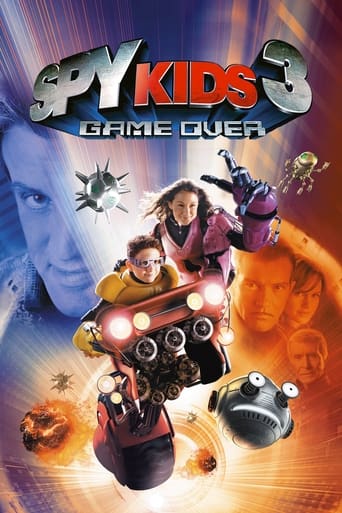
Cover of Spy Kids 3-D: Game Over

film

Spy Kids 3-D: Game Over

2003

Carmen's caught in a virtual reality game designed by the Kids' new nemesis, the Toymaker. It's up to Juni to save his sister, and ultimately the world.

Ages 8+Source checked

Why this age? The film is designed for children but contains frequent fantasy action, threatening robots, characters in danger, simulated deaths, a frightening villain, and emotionally intense family conflict. The violence is stylized and consequences are mostly non-realistic. This is guidance, not a safety guarantee; reading level and family context may differ.

Quick view

At a glance

Recommended age8+

Strongest cautions

  • Frightening scenes3/5
  • Violence3/5
  • Death of a character2/5

Strongest positives

  • Courage & resilience4/5
  • Creativity & curiosity4/5
  • Diverse representation3/5

What’s in it?

Products & advertising2/5
Why this rating?

Features gaming concepts and tie-ins common to the franchise, though not overtly commercialized in a way that disrupts the narrative.

Death of a character2/5
Why this rating?

Characters receive Game Over and lose virtual lives, including apparent defeat; these are game consequences rather than realistic deaths.

Strong language1/5
Why this rating?

Language is limited to mild insults or exclamations typical of a PG family adventure; no strong profanity is evident.

Romance2/5
Why this rating?

Juni and Demetra show romantic feelings, exchange affection, and sacrifice game advantages for each other, but romance is secondary.

Frightening scenes3/5
Why this rating?

Children are trapped in a dangerous game, face giant robot apes and a controlling villain, and repeatedly risk losing their lives.

Violence3/5
Why this rating?

Frequent cartoonish battles, robot attacks, races, and game combat involving child heroes; violence is fantastical and largely non-realistic.

What’s good in it?

Courage & resilience4/5
Why this rating?

Young characters repeatedly face frightening challenges, return to rescue family, and confront powerful enemies despite serious virtual peril.

Creativity & curiosity4/5
Why this rating?

The imaginative virtual-reality levels, inventive gadgets, game mechanics, robots, and problem-solving strongly encourage playful imagination.

Diverse representation3/5
Why this rating?

The cast features strong Hispanic representation, consistent with the franchise's identity.

Educational value1/5
Why this rating?

Encourages problem-solving and critical thinking through the lens of a game, though not overtly educational in a strict sense.

Kindness & empathy3/5
Why this rating?

Characters rescue one another, welcome allies, support family, and resolve longstanding conflict through forgiveness.

Positive messages3/5
Why this rating?

Teamwork, family support, forgiveness, empathy, and helping others defeat selfish control and revenge.

Good role models3/5
Why this rating?

Juni and Carmen show persistence and loyalty; the family cooperates, and Valentin ultimately chooses forgiveness over revenge.

Family discussion

Talk about it

Conversation starters based on this title’s published content notes.

  1. What did courage look like in this story? Was being brave always the same as being fearless?
  2. Which moment felt most tense or frightening? What helped the characters handle fear?
  3. Which choice in Spy Kids 3-D: Game Over would you have made differently, and why?
  4. Who changed the most in Spy Kids 3-D: Game Over, and what caused that change?
Discuss this title with other parents

Community reactions

What families noticed

Add your perspective

Sign in from the homepage to rate this title.

Where to watch or buy

As an Amazon Associate, Dickens & Rumi may earn from qualifying purchases, at no extra cost to you.

These content notes are a starting point, not a guarantee. Review the evidence and use your own judgment before choosing a title.

Report an incorrect rating