Dickens & Rumi
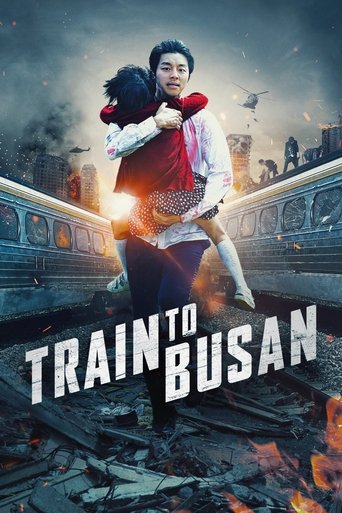
Cover of Train to Busan

film

Train to Busan

2016

When a zombie virus pushes Korea into a state of emergency, those trapped on an express train to Busan must fight for their own survival.

Ages 16+Source checked

Why this age? Frequent intense zombie attacks, frightening peril, blood and injuries, mass deaths, infection, sacrificial deaths, and emotionally distressing family separation make this unsuitable for younger viewers. This is guidance, not a safety guarantee; reading level and family context may differ.

Quick view

At a glance

Recommended age16+

Strongest cautions

  • Death of a character5/5
  • Frightening scenes5/5
  • Violence5/5

Strongest positives

  • Courage & resilience5/5
  • Positive messages4/5
  • Good role models3/5

Keep going

What should you do next?

One review should lead naturally to the next useful choice.

What’s in it?

Products & advertising1/5
Why this rating?

Includes depictions of real-world train services, but no aggressive commercial promotion.

Death of a character5/5
Why this rating?

Multiple major characters die. The film centers on sacrifice and loss, with heavy emotional consequences.

Graphic injury4/5
Why this rating?

Zombie attacks, bites, injuries, corpses, and deaths are depicted with substantial horror intensity, though the excerpt does not detail every visual effect.

Strong language2/5
Why this rating?

Some harsh language and angry confrontations occur. The available evidence does not indicate frequent or especially strong profanity.

Romance2/5
Why this rating?

Includes a mild teenage crush and a subplot about a married couple expecting a child; romance is background to the survival plot.

Frightening scenes5/5
Why this rating?

High tension and suspense with relentless zombie threats. Jump scares and scenes of characters in extreme danger are frequent.

Violence5/5
Why this rating?

Frequent, intense combat against zombie hordes. Characters use makeshift weapons and physical force in life-or-death struggles.

What’s good in it?

Courage & resilience5/5
Why this rating?

Central theme involves characters facing terrifying odds to protect their loved ones.

Creativity & curiosity2/5
Why this rating?

Features inventive survival strategies and creative use of the confined train environment.

Diverse representation2/5
Why this rating?

Features a diverse range of ages and social backgrounds, though primarily focused on a Korean setting.

Kindness & empathy3/5
Why this rating?

Characters protect family and strangers, cooperate under pressure, and make notable sacrifices, although fear also produces exclusion and betrayal.

Positive messages4/5
Why this rating?

The story emphasizes parental responsibility, solidarity, sacrifice, empathy, and the consequences of selfishness during crisis.

Good role models3/5
Why this rating?

Several characters show courage and self-sacrifice, while others behave selfishly or cruelly; moral choices are deliberately contrasted.

Family discussion

Talk about it

Conversation starters based on this title’s published content notes.

  1. What did courage look like in this story? Was being brave always the same as being fearless?
  2. How did the story approach death or loss? What helped the characters cope?
  3. Which choice in Train to Busan would you have made differently, and why?
  4. Who changed the most in Train to Busan, and what caused that change?
Discuss this title with other parents

Community reactions

What families noticed

Add your perspective

Sign in from the homepage to rate this title.

Where to watch or buy

As an Amazon Associate, Dickens & Rumi may earn from qualifying purchases, at no extra cost to you.

These content notes are a starting point, not a guarantee. Review the evidence and use your own judgment before choosing a title.

Something wrong with this guide? Report age, caution, series, cover, or title issues.